


Can You Place Singing Bowls on the Body? Safety and Best Practice
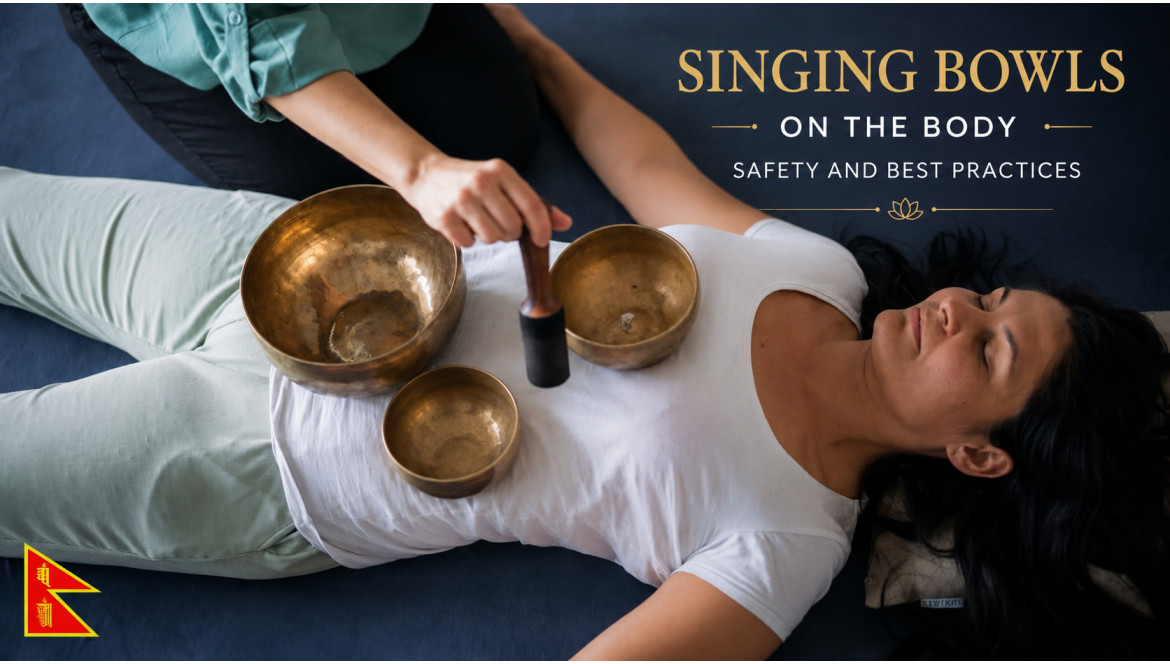
Learn how singing bowls can be safely placed on the body during sound healing sessions. This guide explains how on-body bowls feel different, where they can be placed, who should avoid them, important safety precautions, and how practitioners can approach on-body sound work responsibly.
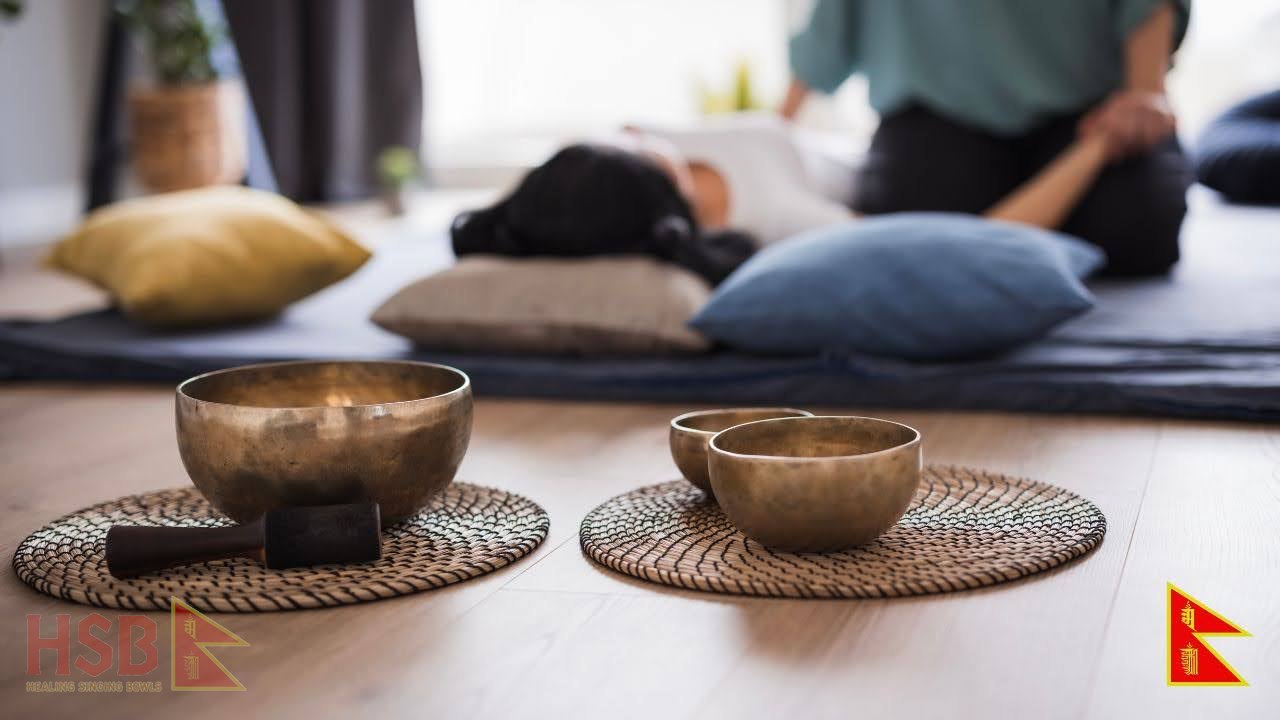
Can You Place Singing Bowls on the Body? Safety and Best Practice
Short answer: yes. Placing a singing bowl directly on the body is a normal part of many sound healing sessions, and most healthy adults can receive it comfortably. But it is not right for everyone, and it needs to be done gently, with proper screening first.
This guide explains why on-body work feels so different, who should avoid it, exactly where to place a bowl, and how to run a session safely from start to finish.
This article is educational. It is not medical advice. If you have a health condition, speak to your doctor before receiving or giving on-body sound work.
In This Article
- Why placing a bowl on the body feels so different
- Who should not receive on-body bowl work
- Where to place a singing bowl on the body
- Where never to place a singing bowl
- Frequently asked questions
- Final thoughts
Why Placing a Bowl on the Body Feels So Different
When you listen to a bowl from across the room, the sound reaches you through the air and into your ears. That is one pathway. When the bowl rests on your body, you add two more.
- Touch. Your skin and deeper tissue contain specialised nerve endings called Pacinian corpuscles. They respond to vibration across roughly 50 to 1,000 Hz, and they are most sensitive around 250 Hz. Many singing bowls sit inside this range, which is why the vibration feels so noticeable and so pleasant rather than irritating.
- Bone and tissue. Sound travels through bone about ten times faster than through air. A bowl resting on the chest or lower back sends vibration through the skeleton and surrounding tissue, so you often feel it somewhere other than the contact point. People commonly report feeling an abdominal bowl in the throat, the back, or the base of the skull.
This combination is why on-body work feels physical rather than only musical. You are not just hearing the bowl. You are being moved by it.
A note on how this is often explained. You will read online that bowl vibration "activates the vagus nerve" and switches the body into rest-and-repair mode. Slow breathing and deep relaxation do shift the nervous system in measurable ways, and sound work supports that shift. But the specific claim about vibration acting on the vagus nerve is a simplification, not established science. We prefer to describe what people reliably experience rather than overstate the mechanism.
Who Should Not Receive On-Body Bowl Work
This is the most important section of this article.
There is very little safety research on singing bowls specifically. The caution list below is borrowed from vibroacoustic therapy, a clinical method that delivers low-frequency vibration into the body through specialised equipment. A singing bowl transmits far less energy than that equipment, so these cautions are precautionary rather than proven dangers. Even so, a responsible practitioner follows them.
Do not place bowls on the body, or get medical clearance first, if the person has any of the following:
- A pacemaker, defibrillator, deep brain stimulator or other electronic implant. This is the firmest rule on the list. Do not place a bowl on or near the chest.
- Epilepsy or any seizure disorder. Rhythmic sound and vibration may lower the seizure threshold in sensitive people. Neurologist clearance first.
- Blood clots, deep vein thrombosis, clotting disorders or a history of stroke. Vibration affects circulation.
- Pregnancy. Most practitioners avoid on-body work entirely, especially over the abdomen and lower back, and especially in the first trimester. There is no safety data.
- Recent surgery, fractures, open wounds or fresh scars. Wait until fully healed and cleared.
- Metal implants, pins, plates or artificial joints. Do not place a bowl over the hardware.
- Severe osteoporosis.
- Fever, active infection or acute inflammation.
- Unstable heart conditions, including recent heart attack, severe arrhythmia or very low blood pressure.
- Acute psychiatric states such as psychosis or mania.
- Inflamed skin conditions like eczema, psoriasis or hives, on the area of contact.
- Severe sound sensitivity (hyperacusis), acute trauma or panic disorder. Begin with off-body sound only, if at all.
Children need extra care: shorter sessions, lower volume, lighter bowls, and never left unsupervised with a heavy bowl on them.
If you are unsure, do not place the bowl. Play it beside the person instead. They will still receive most of the benefit.
Where to Place a Singing Bowl on the Body
Lower Abdomen
Position: Below the navel, above the pubic bone.
Bowl size: Larger, 20–25 cm (8–10 in) or more.
How it feels: Deep and rolling. Vibration spreads through the whole torso. Many people describe it as grounding.
Good for: General relaxation, a busy mind, tension held in the stomach.
This is the best starting placement for a first-time client. It is soft, stable and low risk.
Sternum
Position: Centre of the chest, on the breastbone.
Bowl size: Medium, around 18–25 cm (7–10 in).
How it feels: Immediate and intimate. There is very little soft tissue here, so vibration spreads quickly through the ribs, shoulders and back.
Good for: Emotional work, breath awareness, a sense of openness.
Avoid heavy bowls here. If the bowl restricts breathing, it is too heavy. Never use this placement with anyone who has a cardiac implant.
Sacrum
Position: Lower back, at the base of the spine. The person lies face down or on their side.
Bowl size: Large, deep-toned.
How it feels: Very grounding. Vibration often travels up the spine towards the base of the skull.
Good for: Lower back tension, deep relaxation, pelvic tension.
Support the bowl so it cannot roll off.
Lighter Placements
- Upper back, between the shoulder blades, avoiding direct pressure on the spine
- Palms of the hands or soles of the feet, using small bowls, for a gentler and more local sensation
- Near the head, on a cushion beside it rather than on the skull
Placement Quick Reference
| Placement | Bowl Size | How It Feels | Good For | Key Caution |
|---|---|---|---|---|
| Lower abdomen | Large (20–25 cm+) | Deep, rolling, grounding | General relaxation, busy mind | Avoid during pregnancy |
| Sternum | Medium (18–25 cm) | Immediate, spreads through ribs | Emotional work, breath awareness | Never with cardiac implants; avoid heavy bowls |
| Sacrum | Large, deep-toned | Grounding, travels up the spine | Lower back tension, deep relaxation | Support the bowl so it cannot roll |
| Upper back | Medium | Broad, spreading warmth | Shoulder tension, general relaxation | Avoid direct pressure on the spine |
| Palms / soles | Small | Gentle, local | Lighter sessions, sensitive clients | Use only small, lightweight bowls |
Where Never to Place a Singing Bowl
- The throat or front of the neck
- The eyes or face
- Directly over the heart in anyone with a cardiac condition or implant
- Any bony point that is painful, bruised or injured
- The abdomen or lower back during pregnancy
Frequently Asked Questions
Can you place a singing bowl on the body?
Yes. Placing a singing bowl directly on the body is a normal part of many sound healing sessions, and most healthy adults can receive it comfortably. It is not right for everyone, and it needs to be done gently, with proper screening first.
Who should not receive on-body singing bowl work?
People with pacemakers or electronic implants, epilepsy or seizure disorders, blood clots or clotting disorders, pregnancy, recent surgery or fractures, metal implants, severe osteoporosis, fever or active infection, unstable heart conditions, acute psychiatric states, or severe sound sensitivity should avoid on-body bowl work or seek medical clearance first.
Where should you place a singing bowl on the body?
Common placements include the lower abdomen, the sternum, the sacrum, the upper back between the shoulder blades, the palms of the hands, and the soles of the feet. Never place a bowl on the throat, face, eyes, or directly over the heart in anyone with a cardiac condition.
Does placing a singing bowl on the body feel different from playing it at a distance?
Yes. When the bowl rests on the body, vibration travels through skin, tissue, and bone as well as through the air. Sound moves through bone about ten times faster than through air, which is why people often feel the vibration somewhere other than the contact point.
Is it safe to place a singing bowl on the body during pregnancy?
Most practitioners avoid on-body work entirely during pregnancy, especially over the abdomen and lower back, and especially in the first trimester. There is no safety data. Speak to your doctor before receiving on-body sound work while pregnant.
What size bowl should I use for on-body work?
Larger bowls of 20 to 25 cm or more work well for the lower abdomen and sacrum. Medium bowls around 18 to 25 cm suit the sternum. Small bowls are better for lighter placements such as the palms or soles of the feet. Avoid heavy bowls on the chest.
Final Thoughts
Placing a bowl on the body turns sound into touch. It is one of the most direct experiences a singing bowl can offer, and for most people it is deeply restful.
It also asks more of the person giving it. Screen properly, warm the bowl, place it gently, strike softly, and stay alert to the person in front of you rather than to your own technique. Done that way, on-body bowl work is safe, simple and quietly powerful.
At Healing Singing Bowls we select larger bell metal bowls specifically for practitioners doing body work, and we test the sustain and pulsation of each one before it ships.
In Same Category
- Om Sajan Healing Center and Museum: Inside Kathmandu's Three-Floor Singing Bowl Sanctuary
- What Is Sound Healing? Traditions, Sound Baths & Research
- Tingshas vs Singing Bowls: Which Sound Healing Tool Should You Use?
- Handmade vs Machine-Made Singing Bowls: Key Differences
- Singing Bowl Mallet Guide: How to Choose the Right Mallet


Comments
No comment at this time!
Leave your comment