


Handmade vs Machine-Made Singing Bowls: Key Differences
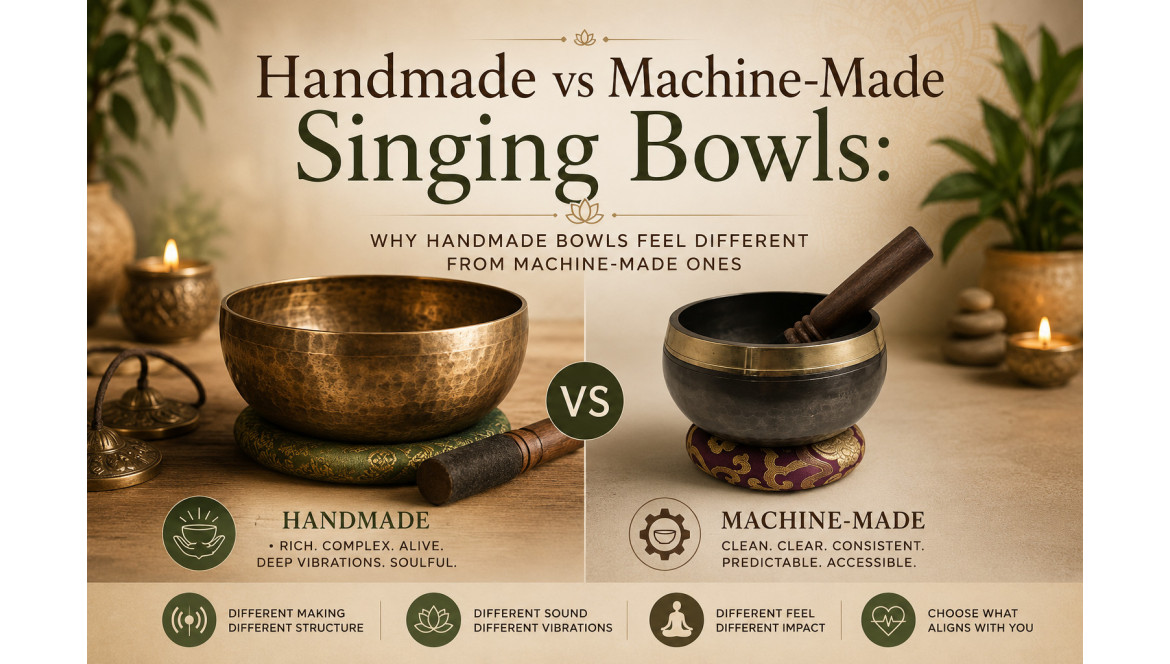
Learn the real differences between handmade and machine-made singing bowls, from sound and vibration to craftsmanship, tradition, and price. Discover which type is best for meditation, sound healing, and long-term practice.
Handmade vs Machine-Made Singing Bowls: Why Handmade Bowls Feel Different From Machine-Made Ones
If you're shopping for a singing bowl, you'll notice a big price difference between handmade and machine-made options. The difference isn't just cost. It's about how the bowl feels, sounds, and heals. Handmade singing bowls feel warmer, more alive, and create richer vibrations, while machine-made singing bowls sound cleaner and cost less.
Quick Answer: Handmade singing bowls are best suited to sound healing, on-body therapy, chakra balancing, and serious long-term practice, thanks to their rich overtones and deep resonance. Machine-made singing bowls are best suited to beginner meditation, budget-conscious buyers, and consistent, predictable practice. Many practitioners start with a machine-made bowl and upgrade to a handmade one as their practice deepens.
What Are Handmade Singing Bowls?
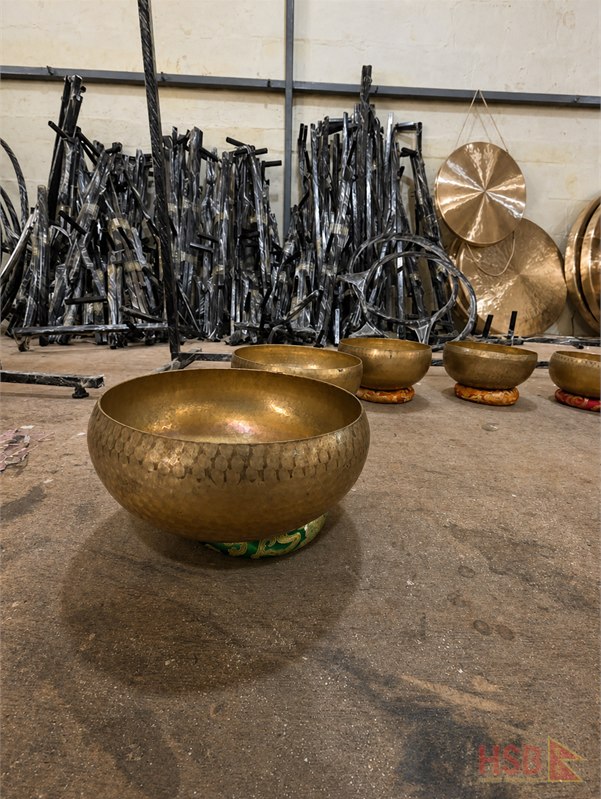
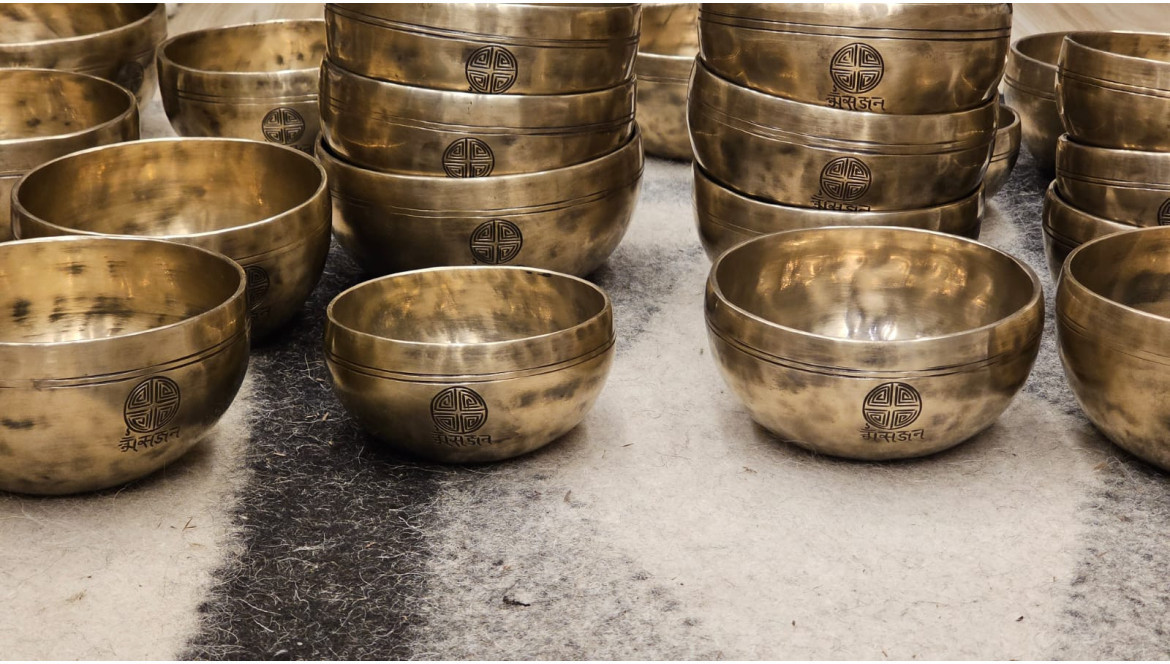
Handmade singing bowls, also called hand-hammered bowls, are created by skilled artisans who beat metal sheets into shape by hand. Artisans heat or work cold metal sheets and use hammers to shape the metal into a bowl form, and each hammer strike creates subtle dents and variations in thickness. The result is slightly imperfect, so no two handmade bowls are exactly alike. Many handmade bowls use traditional seven-metal alloys containing copper, tin, zinc, iron, lead, gold, and silver, a combination used for centuries in Himalayan and Vedic traditions.
What Are Machine-Made Singing Bowls?
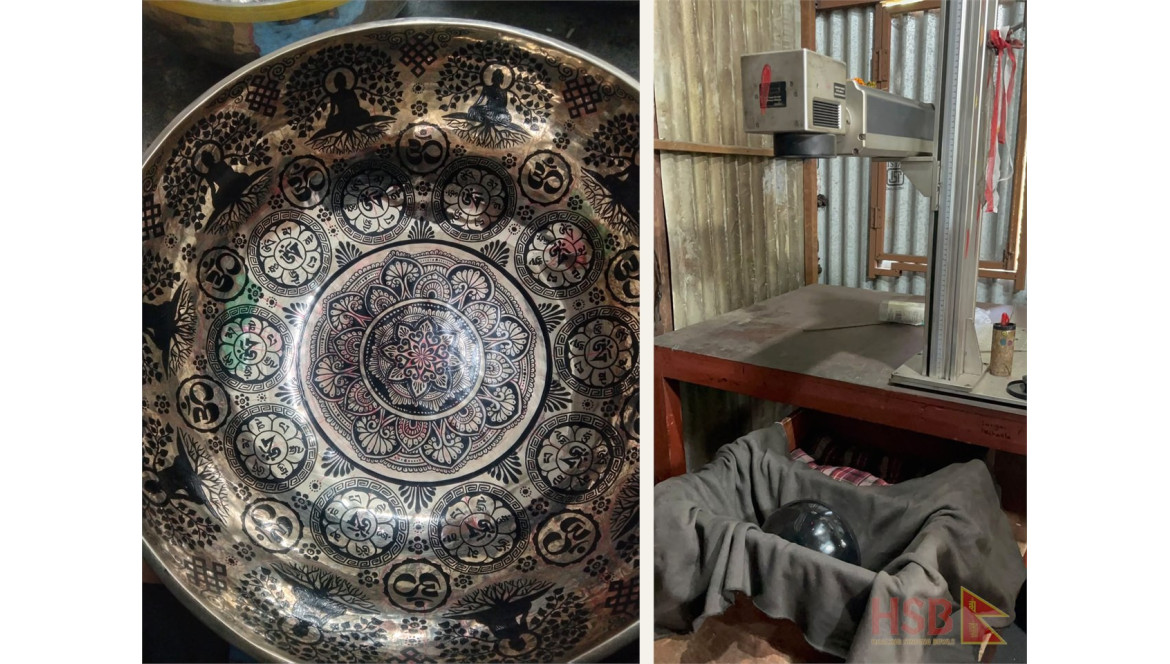
Machine-made singing bowls are created using industrial methods in factories. Hot brass, a mix of copper and zinc, is poured into molds or spun on a lathe, then the bowl is ground and polished to create a perfectly smooth, uniform shape. The result is consistent, so every machine-made bowl looks and sounds nearly identical.
Quick Comparison
| Aspect | Handmade Bowls | Machine-Made Bowls |
|---|---|---|
| How Made | Hand-hammered by artisans | Mass-produced in factories |
| Metal Used | Seven-metal alloys or bronze | Brass (copper + zinc) |
| Shape | Slightly irregular, unique | Perfectly uniform and symmetrical |
| Surface | Visible hammer marks | Smooth and polished |
| Sound Character | Rich, complex, many overtones | Clean, single main tone |
| Vibration Strength | Strong, deep resonance | Mild, focused vibration |
| Feel in Hand | Warm, alive, textured | Smooth, cold, polished |
| Energetic Feel | Traditional, spiritual, soulful | Modern, standardized |
| Best For | Sound healing, deep work | Beginner meditation |
| Price | Higher ($100-$500+) | Lower ($30-$150) |
| Cultural Value | High (artisanal, traditional) | Lower (mass-produced) |
Why Handmade Bowls Feel Different From Machine-Made Ones
The Structure Matters
When artisans hand-hammer a singing bowl, they create subtle dents and irregularities, slightly uneven thickness throughout, non-uniform symmetry, and unique hammer marks. Machine-made bowls, by contrast, have perfectly uniform walls, consistent thickness everywhere, perfect circular symmetry, and smooth, polished surfaces. This matters because irregular structure creates richer vibrations. When a bowl has uneven thickness, different parts vibrate at different rates, creating complexity and depth that uniform bowls can't match.
Handmade Bowl Sound
Practitioners report that handmade bowls produce rich, complex tones with multiple frequencies, many overtones creating layered sound, evolving waves that change as you play, and palpable vibration you can feel in your hands and body. When you play a handmade bowl, you hear not just one note, but many frequencies at once. This happens because the irregular, hand-hammered structure means the metal vibrates in multiple ways, with thick spots vibrating differently than thin spots.
Machine-Made Bowl Sound
Machine-made bowls produce clean, clear tones with one main note, fewer overtones with simpler sound, stable tones that don't change much, and mild vibration that's more about the note than the physical buzz. Because the bowl is perfectly symmetrical and made from one metal alloy, it vibrates in predictable, uniform ways.
Physical Feel: How Handmade Bowls Feel Different
Handmade Bowls Feel Alive
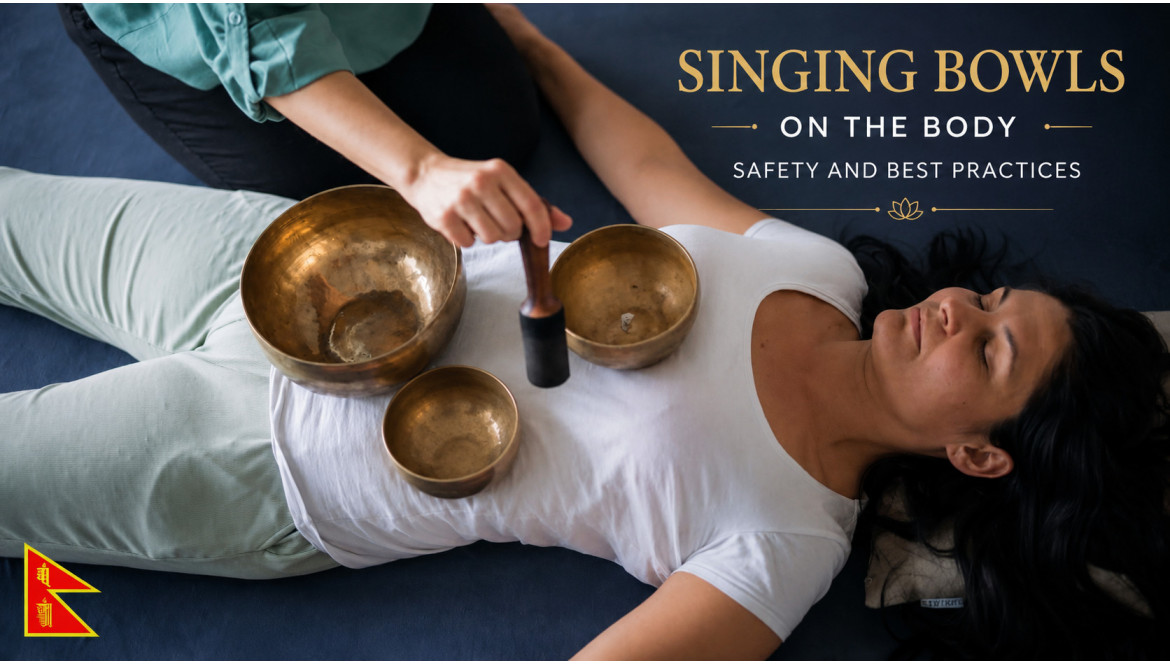
Practitioners report that handmade bowls have stronger, palpable vibrations that travel through your fingers and palms, a warmer, softer touch despite being metal, a sense of presence from the visible hammer marks, and an immersive, energetic feeling that surrounds your body. When you hold a handmade bowl while playing it, you feel the vibration intensely, and when you place it on your body during sound healing, the vibrations penetrate deeply. This is why sound healers and energy workers prefer handmade bowls for therapeutic work.
Machine-Made Bowls Feel Predictable
Machine-made bowls have even vibration that's smooth but less intense, a smooth, cool feel to the touch, a perfect, polished appearance that some people like, and a clean tone without as much physical buzz. The uniform walls vibrate evenly, but you feel less resonance in your hands and body. This doesn't mean machine-made bowls don't work; they do, but the physical experience is different.
The Vibration Difference Explained
With handmade bowls, the irregular thickness means different parts of the bowl vibrate at different frequencies. These frequencies interact, creating complex waves that move through your body in multiple ways. With machine-made bowls, the uniform thickness means the entire bowl vibrates at similar frequencies, creating a single, clean vibration that's predictable but less complex. Think of it this way: a handmade bowl is like listening to an orchestra with many instruments, while a machine-made bowl is like listening to a single clear note. This is also why no two singing bowls sound the same, even when they're the same size and shape.
Energetic and Cultural Significance
Handmade Bowls: Traditional and Spiritual
Seven-metal alloys have been used in Himalayan and Vedic traditions for thousands of years. Each metal is associated with planets such as copper with Venus and silver with the Moon, with chakras through different metals for different energy centers, and with healing properties through traditional associations in Ayurveda. Practitioners and collectors report that this traditional craftsmanship creates a spiritual quality that feels different from modern instruments. Each handmade bowl is one-of-a-kind, and the hammer marks, slight tone variations, and imperfections make it feel personal and soulful, which matters to serious practitioners and collectors. Working with a handmade bowl connects you with centuries of Himalayan healing tradition.
Machine-Made Bowls: Modern and Accessible
Machine-made bowls lack this artisanal history and spiritual connection. They are standardized and easy to replicate, modern in design and approach, less culturally significant but still functional, and good for beginners who want to explore without spiritual depth.
When to Choose Each Type
Choose Handmade If:
You're committed to sound healing or meditation, you want therapeutic-grade vibrations, you want an artisanal and spiritual tool, you're willing to invest in quality, you want a unique one-of-a-kind piece, or you value traditional Himalayan craftsmanship. Handmade bowls are also the better choice for sound healing sessions, on-body therapy work, chakra balancing, serious practice, collector or artistic value, and deep immersion work.
Choose Machine-Made If:
You're exploring meditation for the first time, you have a limited budget, you want easy and consistent tones, you want a modern, polished look, or you want a low-risk entry into sound healing. Machine-made bowls are also a good fit for beginner meditation, consistent daily practice, and budget-conscious buyers.
Choose Either If:
You simply want quick stress relief, since both handmade and machine-made bowls reduce stress effectively.
Understanding the Price Difference
Handmade bowls require 4 to 8 hours of skilled artisan labor, use premium seven-metal alloys, are each unique with no mass production, carry higher material and labor costs, and support traditional Himalayan craftsmanship. Machine-made bowls are produced quickly in factories, use cheaper brass material, are made in high volume to reduce per-unit cost, involve lower overall labor and material investment, and rely on standardized production methods. The price difference reflects the time, skill, and materials involved, not marketing or hype.
Frequently Asked Questions
Are handmade bowls worth the extra cost?
If you plan serious sound healing or meditation practice, yes. The richer vibrations and deeper experience justify the investment. For casual, beginner use, machine-made bowls work fine.
Can machine-made bowls still help with meditation?
Yes. They produce therapeutic vibrations and calm the nervous system. They're not as rich or immersive as handmade bowls, but they still work.
Which bowl is better for chakra work?
Handmade bowls with seven-metal alloys. The traditional metals correspond to chakras, and the complex vibrations support deeper chakra balancing.
How long do handmade bowls last?
Properly cared for, they last decades or even generations. They don't wear out or lose quality over time.
Can I play a handmade bowl as easily as a machine-made bowl?
Handmade bowls require slightly more practice to create smooth tones, but most people can learn quickly. Machine-made bowls are slightly easier for absolute beginners.
Do handmade bowls break easily?
No. They're very durable. Handle them with care, but they're designed to last.
What size handmade bowl should I get?
Start with 7 to 8 inches. It's easier to play and offers excellent vibrations for beginners.
Is brass safe in singing bowls?
Yes. Brass, a mix of copper and zinc, has been used in musical instruments for centuries and is completely safe.
Can I use handmade bowls for sound baths?
Yes. Professional sound healers use handmade bowls because of their rich vibrations and complex tones.
Should I buy one big bowl or multiple small bowls?
For beginners, one quality handmade bowl around 7 to 8 inches is perfect. As you develop your practice, adding bowls of different sizes creates richer soundscapes.
Final Thoughts
Handmade singing bowls bring rich, layered sound, deep resonance, and centuries of traditional craftsmanship. Machine-made singing bowls bring consistency, affordability, and an easy entry point for beginners. The honest truth is that handmade bowls offer a significantly richer, deeper experience, and if you can afford them, they're worth the investment. Choose based on your practice and budget, and remember that either type can support a meaningful sound healing journey.
About Sajan Shakya
Sajan Shakya is the HSB contact responsible for customer support, digital development and international coordination. He comes from a Newar family of singing-bowl makers and has a background in information technology. Through Healing Singing Bowls and its online shop, he helped open the family workshop to international customers. Learn more about the HSB team and the HSB workshop in Kathmandu Valley.
In Same Category
- Can You Place Singing Bowls on the Body? Safety and Best Practice
- Om Sajan Healing Center and Museum: Inside Kathmandu's Three-Floor Singing Bowl Sanctuary
- Tingshas vs Singing Bowls: Which Sound Healing Tool Should You Use?
- Singing Bowl Mallet Guide: How to Choose the Right Mallet
- Why Do Tingshas Sound So Sharp and Clear?


Comments
No comment at this time!
Leave your comment