


How to Choose a High-Quality Singing Bowl | Complete Buying Guide
.jpg "How to Choose a High-Quality Singing Bowl | Complete Buying Guide")
Learn how to choose a high-quality singing bowl with this simple guide. Understand sound quality, materials, craftsmanship, and how to avoid low-quality bowls.
How to Choose a High-Quality Singing Bowl: A Simple Guide for Everyone
Most people choose a singing bowl by how it looks. They pick the one with the prettiest design, the shiniest surface, or the most interesting label. Then they get it home, play it and feel nothing.
Here is the truth: a good singing bowl is all about the sound. How it looks is the least important thing. How it sounds and how it makes your body feel is everything.
This guide will show you exactly what to look for. Whether you are a professional sound healer or someone buying their very first bowl, by the end of this article you will know how to choose well.
What Does "High Quality" Actually Mean?
A high-quality singing bowl does three things well:
- It is made from good materials
- It is crafted with skill and care
- It produces a rich, stable, long-lasting sound
All three matter. A bowl can look beautiful and still fail all three tests. Let's go through each one simply and clearly.
Criteria 1: The Sound Test — Start Here, Always
The sound is the most important thing. Before you think about anything else, listen.
What Good Sound Sounds Like
One clear main note
When you tap the bowl or run a mallet around its edge, you should hear one clean, clear musical note. It should sound steady and stable. Not buzzy, wobbly, or harsh.
A long, smooth ring
After you tap the bowl, the sound should keep going for a long time, fading out slowly and smoothly, like a gentle wave. If the sound cuts off quickly or breaks up, the bowl is not high quality.
Extra layers of sound underneath
This one is special. When a good bowl rings, you do not just hear one note. You hear smaller, softer tones hiding inside the main note, almost like a chord. This is called overtones. It is what makes a bowl feel rich and deeply calming. Cheaper bowls usually produce just one flat sound with no depth.
Smooth sound when you circle the rim
Run the mallet slowly around the rim of the bowl. The sound should grow steadily and smoothly. If it keeps cutting out, squeaking, or jumping around, that is a sign of lower quality. Learn more about technique here.
A Simple 3-Step Test Anyone Can Do
Step 1: Tap the bowl gently once. Count how long the sound lasts. A good bowl rings for many seconds.
Step 2: Slowly circle the rim with the mallet. The sound should build up smoothly without breaking.
Step 3: Close your eyes. Notice how the sound makes your body feel. A good bowl feels calming and settling. Not irritating or harsh.
Examples of High-Quality Singing Bowls
If you are not sure what a well-balanced bowl sounds like in practice, here are a few real examples that meet the criteria explained above:
- Full Moon Bowl (Santa) – Produces a deep, grounding sound with strong resonance. Ideal for slow meditation and calming sessions.
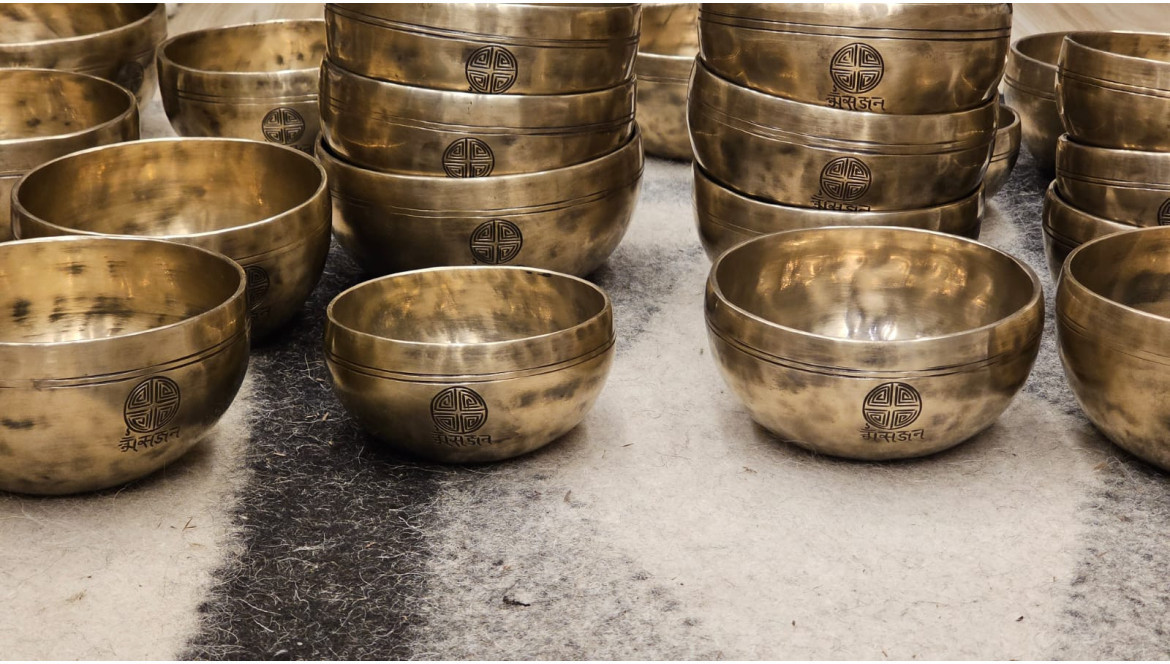
- OM SAJAN Singing Bowl – Known for its clear, stable tone and long, smooth sustain. When played around the rim, it produces consistent sound with noticeable overtones.
- Full Moon Bowl (Sajan) – Offers a rich, layered sound with strong harmonic depth, making it a good example of a well-crafted hand-hammered bowl.
Criteria 2: What the Bowl Is Made From
The metal inside the bowl changes everything about how it sounds.
Traditional Metal Bowls
Good Himalayan singing bowls are made from a mix of metals, mainly copper and tin (together called bronze), sometimes with small amounts of silver, iron, or zinc added in.
This mix of metals is important. It makes the bowl produce a warmer, richer sound that lasts longer. Cheap bowls are often made from just one low-grade metal, and you can hear the difference immediately.
Thick Enough, But Not Too Thick
The thickness of the bowl's walls affects the sound, too.
- Bigger, thicker bowls produce a lower, deeper sound
- Smaller, thinner bowls produce higher, brighter sound
In a well-made bowl, the walls are the same thickness all the way around. If some spots feel "dead" when you tap them, like the sound just stops, that means the walls are uneven. That is a flaw.
Will It Last?
Good metal that has been properly treated during making will not crack, dent, or warp even after years of regular use. If a bowl feels very light and thin, almost like a tin can, it will not last long and will not sound good either.
Criteria 3: Hand-Made vs Machine-Made
This is one of the biggest differences you will find between bowls.
Hand-Hammered Bowls — The Better Choice for Healing
How they are made: A craftsperson heats the metal and shapes it by hand, hitting it carefully with a hammer over and over until the bowl takes shape. Every single bowl comes out slightly different.
What they sound like: Warm, deep, and full of those hidden layers of sound (overtones). The tiny imperfections from hand-hammering actually make the sound richer, not worse.
For example, bowls like the OM SAJAN Singing Bowl or the Full Moon Bowl (Sajan) clearly demonstrate the warm, layered sound that hand-hammered craftsmanship produces.
Machine-Made Bowls — Fine for Decoration, Less Ideal for Healing
How they are made: A machine presses or spins the metal into a perfectly uniform shape. Every bowl looks the same.
What they sound like: Often loud and clear, but flat. There is usually just one simple tone with very little depth or richness.
Criteria 4: How to Check Quality Like a Pro
You do not need special training to evaluate a bowl well.
Use a free tuner app
Download any free tuner app on your phone. Play the bowl and see what musical note it produces. A good bowl will show one clear, stable note.
Listen for overtones
Let the bowl ring out fully. After the main note, can you hear softer tones hidden inside it? That layered sound is a very good sign.
Test it in two ways
Strike the bowl with the mallet. Then circle the rim with the mallet. A high-quality bowl sounds consistent both ways.
Criteria 5: Does Where It Comes From Matter?
Yes, and this is where Nepal stands out above the rest.
The tradition of making singing bowls in Nepal goes back hundreds of years. It is still practiced today by artisan families who continue the same hand-hammered methods passed down through generations.
Learn more about Nepal and its traditions here.
Final Thought: Buy With Your Ears, Not Your Eyes
The singing bowl market is full of beautiful objects. It is easy to be drawn in by designs, descriptions, and labels. But a bowl that looks extraordinary and sounds flat will never serve you the way a truly good bowl will. Remember the basics: clear tone, long sustain, rich layers of sound, honest craftsmanship. If you are looking for high-quality options, explore our collection of high-quality singing bowls.
When you find all of those things together, you have found the right bowl.
Disclaimer: This article is for informational purposes only. Singing bowl practice is a complementary wellness method and not a medical treatment.
In Same Category
- Inside Kathmandu’s Singing Bowl Finishing Industry
- Do Singing Bowls Really Contain 7 Metals? The Truth Explained Simply
- How Size, Thickness, and Form Change the Sound of a Singing Bowl
- The Laser Revolution: How Machine Carving Is Quietly Replacing Nepal's Hand-Carved Singing Bowl Tradition
- Hand-Hammered Singing Bowls: The Step Machines Replaced


Comments
No comment at this time!
Leave your comment