


What Is Resonance in Singing Bowls? Complete Guide to Healing Sound
A detailed explanation of resonance in singing bowls, how it works, its sound structure, and how it affects the body and mind in meditation and sound healing practices.
What Is Resonance in Singing Bowls? A Complete Guide to Their Healing Sound
Have you ever struck a singing bowl and noticed how the sound does not just disappear?
It grows. It fills the room. It keeps ringing long after you have stopped touching it.
That moment is not magic. It is resonance. And it is the very reason singing bowls have been used for centuries in meditation, healing, and spiritual practice.
Whether you are completely new to sound healing or already have a few bowls in your collection, understanding resonance will change the way you listen, play, and experience these instruments.
In this guide, you will learn:
- What resonance in singing bowls actually is
- How it works in simple, everyday language
- What it does to your body and mind
- How to use it more intentionally in your practice
What Is Resonance in Singing Bowls?
Resonance is simply the way a singing bowl keeps singing even after you stop touching it.
When you strike or rub the rim with a mallet, you give the bowl a small push of energy. If you keep feeding that energy at the right rhythm, the sound does not fade. Instead, it builds up, grows fuller, and then slowly fades on its own once you stop.
That build-up and lingering is resonance.
A Simple Analogy
Think of pushing someone on a swing. If you push at exactly the right moment every time, the swing goes higher and higher with very little effort. Push at the wrong moment and the swing slows down.
A singing bowl works the same way. When your playing matches the bowl's own natural rhythm, the sound rises and sustains beautifully.
How Does a Singing Bowl Start to Resonate?
When you tap or rub the rim, the metal begins to flex in and out very rapidly. This flexing pushes against the air around it, creating the sound waves your ears pick up as a tone.
As you keep circling the rim at a steady speed and pressure:
- Each pass gives the bowl another small nudge
- These nudges add up instead of canceling each other out
- The vibration grows stronger and more stable
- The sound swells and the tone becomes clearer
This is why technique matters so much. A smooth, steady motion helps the bowl resonate deeply. A jerky or too-heavy touch can interrupt the vibration and choke the sound.
The Bowl's "Natural Voice"
Every object in the world has natural frequencies — specific ways it prefers to vibrate when disturbed. When you knock on a wooden table, it makes a certain sound. When you tap a wine glass, it rings at its own unique pitch.
Singing bowls have natural frequencies too, and these are what come alive when the bowl resonates. These frequencies are shaped by:
- Size — larger bowls vibrate more slowly and produce deeper, lower tones
- Wall thickness — thicker walls create a denser, more grounded sound
- Shape and curve — the profile of the bowl affects how freely it can vibrate
- Metal composition — each metal blend produces a unique tonal character
When you play a bowl and match its natural frequency, resonance happens almost effortlessly. The sound opens up, as if the bowl has been waiting for that exact moment to sing.
What Does Resonance Sound and Feel Like?
What You Hear
A resonating bowl produces a clear, focused tone that seems to bloom as you play. It starts soft, grows fuller as you circle the rim, and then fades slowly and smoothly long after you lift the mallet. High-quality bowls can sustain their resonance for 20 to 30 seconds or even longer.
What You Feel
Strong resonance is not just something you hear. You feel it too.
- A gentle hum or vibration in your hand while holding the bowl
- A soft buzzing in your chest or belly when the bowl is placed nearby
- A sense of being "wrapped" in the sound, as if the vibration is passing through you
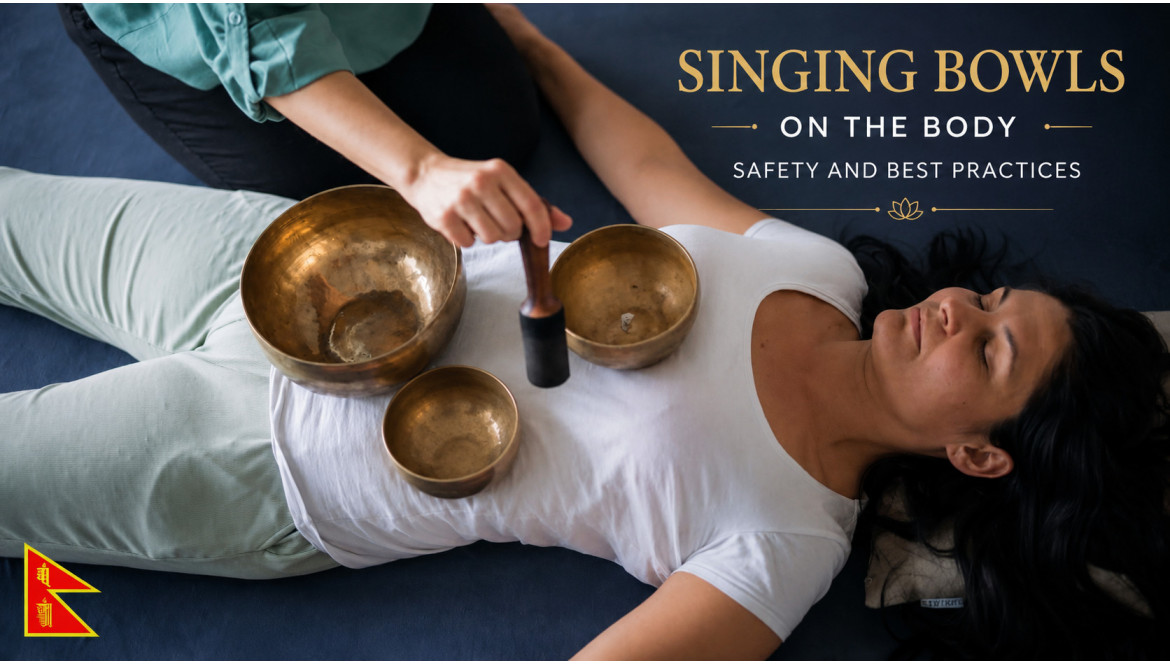
This is one of the reasons sound healing practitioners place bowls directly on or near the body during sessions. The vibration does not just travel through air. It travels into you.
The Layers of Sound — Fundamental Tone and Overtones
One of the most fascinating things about a singing bowl is that it does not produce just one note. It sings several notes at the same time.
The Fundamental Tone
This is the main, lowest note — the one you immediately hear when you play the bowl. It is the bowl's primary voice and the foundation of its resonance.
Overtones (Harmonics)
Sitting above the fundamental are softer, higher-pitched tones called overtones. These are quieter, but they add color and emotional depth to the sound. Two bowls might share the same fundamental note but feel completely different because of their overtones.
The Gentle Pulse
When two very close frequencies ring together, they create a slow, rhythmic pulsing in the sound — often described as a soft "wah-wah" effect. This pulsing typically happens between 2 and 12 times per second.
Many practitioners believe this is part of what makes a sound bath feel so hypnotic and deeply relaxing.
Sympathetic Resonance — When Bowls Sing to Each Other
A singing bowl can make another bowl ring without even touching it.
This is called sympathetic resonance. It happens when two bowls have similar natural frequencies. Play one bowl loudly enough, and the sound waves it sends into the air can match the natural voice of a nearby bowl, making it vibrate and ring on its own — as if it is answering.
In a sound healing setting, this creates a beautiful layering effect:
- The bowls blend their resonances
- Richer, more complex tones fill the space
- The overall sound bath feels deeper and more immersive
Experienced practitioners carefully choose sets of bowls whose tones complement each other, so the sympathetic resonance between them enhances the whole experience.
Water in the Bowl — Seeing Resonance With Your Own Eyes
Want to see resonance rather than just hear and feel it? Try this: pour a small amount of water into your singing bowl, then slowly play the rim until the bowl starts to resonate. Watch the surface of the water.
Here is what happens as the resonance builds:
- Small ripples appear and spread outward from the walls
- The ripples become more defined wave patterns
- At peak resonance, tiny droplets may begin jumping and dancing on the surface
These dancing droplets are called Faraday waves. They are a visible sign that the bowl is vibrating powerfully and steadily. This is a wonderful demonstration to use in workshops or with clients — what is invisible in the air becomes beautifully visible in the water.
Metal Bowls vs. Crystal Bowls
Not all singing bowls resonate the same way. Understanding the difference helps you choose the right bowl for your needs.
Traditional Metal (Himalayan / Tibetan) Bowls
- Made from a blend of metals, often five or more
- Warm, complex, layered resonance
- Overtones are rich and feel earthy and human
- Sound evolves and changes as it sustains
- Great for deep relaxation, stress relief, and body placement work
Crystal Singing Bowls
- Made from crushed quartz crystal
- Clean, pure, glass-like resonance
- Strong fundamental with fewer, more aligned overtones
- Exceptionally long sustain
- Popular for chakra work, large group sound baths, and clarity-focused practices
Neither type is better than the other. They simply offer different resonant experiences, and many practitioners use both.
What Controls the Quality of Resonance?
Craftsmanship
A well-made bowl has even walls, a smooth rim, and a balanced shape. These qualities allow it to vibrate freely without buzzing or cutting short. Poorly made bowls may ring unevenly or fade too quickly.
Size and Weight
- Larger, heavier bowls resonate more deeply and sustain longer
- They produce big, grounding fundamental tones
- Smaller bowls give shorter, higher-pitched resonance with a delicate, bell-like quality
Your Playing Technique
This is one of the most overlooked factors. Here is what helps:
- Use a soft or suede-wrapped mallet for a smoother, fuller tone
- Keep your wrist relaxed and your movement steady
- Press lightly — heavy pressure dampens resonance instead of building it
- Rest the bowl gently in your palm or on a cushion, not gripped tightly
- Experiment with speed to find the bowl's "sweet spot" where it suddenly opens up and sings
Resonance, the Body, and Sound Healing
How Vibration Enters the Body
Sound waves from a resonating bowl travel through the air and into your body, creating subtle physical vibrations in your tissues. Because the human body is mostly made of water, and sound travels faster through water than through air, these vibrations can reach quite deep.
Many people experience this as a softening or releasing of tension, particularly when bowls are placed near or on the body.
Brainwave Entrainment and Deep Relaxation
The brain has a remarkable tendency to synchronize its activity with rhythmic sensory input. This is called entrainment.
The slow, steady resonance of a singing bowl, along with the gentle pulsing of beating overtones, can guide the brain toward slower, more relaxed brainwave states. This is part of why sound baths feel so deeply restful. The resonance essentially gives the nervous system a rhythm to follow — one that says: slow down, relax, it is safe here.
Chakras and Energy Work
In traditions that work with the chakra system, bowls of different pitch ranges are used to target specific energy centers:
- Lower-toned bowls — root and sacral chakras, grounding and stability
- Mid-range bowls — heart and solar plexus, emotion and confidence
- Higher-pitched bowls — throat, third eye, and crown, clarity and spiritual connection
Whether or not you work within a chakra framework, the resonance of a bowl matched thoughtfully to the intention of a session can support deep shifts in how a person feels.
Practical Tips — How to Get Better Resonance
When Testing or Buying a Bowl
- Listen for a tone that blooms and sustains for at least 15 to 20 seconds
- Listen for clear, pleasant overtones — not a buzzing or uneven wobble
- Try multiple mallets and striking positions to hear how flexible the bowl's resonance is
In Your Daily Practice
- Begin sessions with long, resonant tones to settle the space and your own nervous system
- Experiment with placing bowls at different distances from your body
- When working with multiple bowls, choose tones that blend comfortably — you will feel the difference immediately
Common Mistakes to Avoid
- Pressing the mallet too hard against the rim — this kills resonance
- Using a hard wooden mallet for rimming — it produces a scratchy, uneven tone
- Placing the bowl on a hard surface — a cushion or folded cloth allows it to vibrate freely
Common Questions About Singing Bowl Resonance
Why does my singing bowl stop ringing quickly?
Usually one of three things: the bowl is small and lightweight, the mallet or technique is damping the vibration, or the bowl is resting on a surface that absorbs vibration too quickly. Try adjusting your technique and surface first.
How do I make my singing bowl resonate more?
Use a softer mallet, keep your speed consistent, and press more lightly against the rim. Give the bowl time to build. Sometimes slowing down is exactly what it needs to open up.
Do bigger bowls always have better resonance?
Not better, just different. Larger bowls resonate more deeply and longer. Smaller bowls have a shorter but brighter, more penetrating resonance. The best resonance depends entirely on the purpose of your practice.
Does a perfectly tuned bowl resonate better?
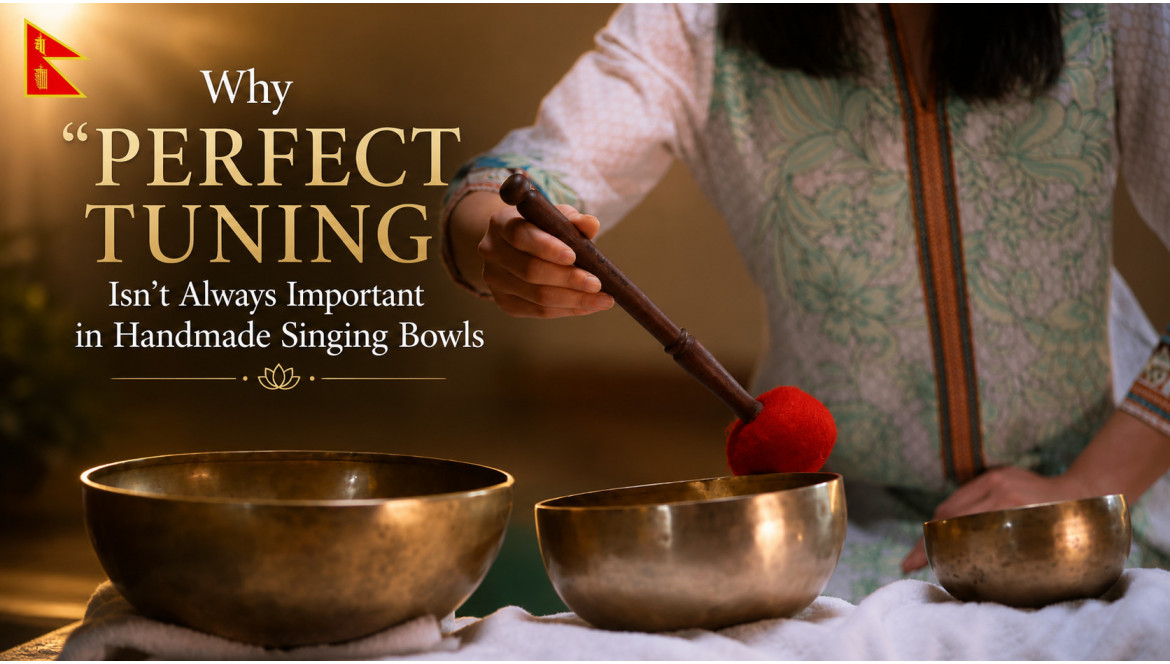
Not always. Many traditional Himalayan bowls are not tuned to precise Western musical notes, yet they have extraordinarily rich, complex resonance. Precise tuning and beautiful resonance are two separate qualities.
Conclusion
Resonance is the heart of everything that makes a singing bowl so powerful.
It is the reason the sound fills the room and lingers in the air. It is the reason you feel the vibration in your body long after the mallet has left the rim. It is the reason a single, well-played bowl can shift the energy of an entire space — and of the people inside it.
The next time you play your bowl, pause and listen not just to the first note, but to what comes after.
Listen to the way the sound blooms and grows. Listen to the overtones shimmering above the main tone. Feel where the vibration settles in your body.
That is resonance. That is the bowl's natural voice, fully awake and singing.
In Same Category
- Can You Place Singing Bowls on the Body? Safety and Best Practice
- Om Sajan Healing Center and Museum: Inside Kathmandu's Three-Floor Singing Bowl Sanctuary
- Handmade vs Machine-Made Singing Bowls: Key Differences
- Singing Bowl Mallet Guide: How to Choose the Right Mallet
- Why Do Tingshas Sound So Sharp and Clear?


Comments
No comment at this time!
Leave your comment