


Why Some People Feel Strong Singing Bowl Effects (and Others Don’t)
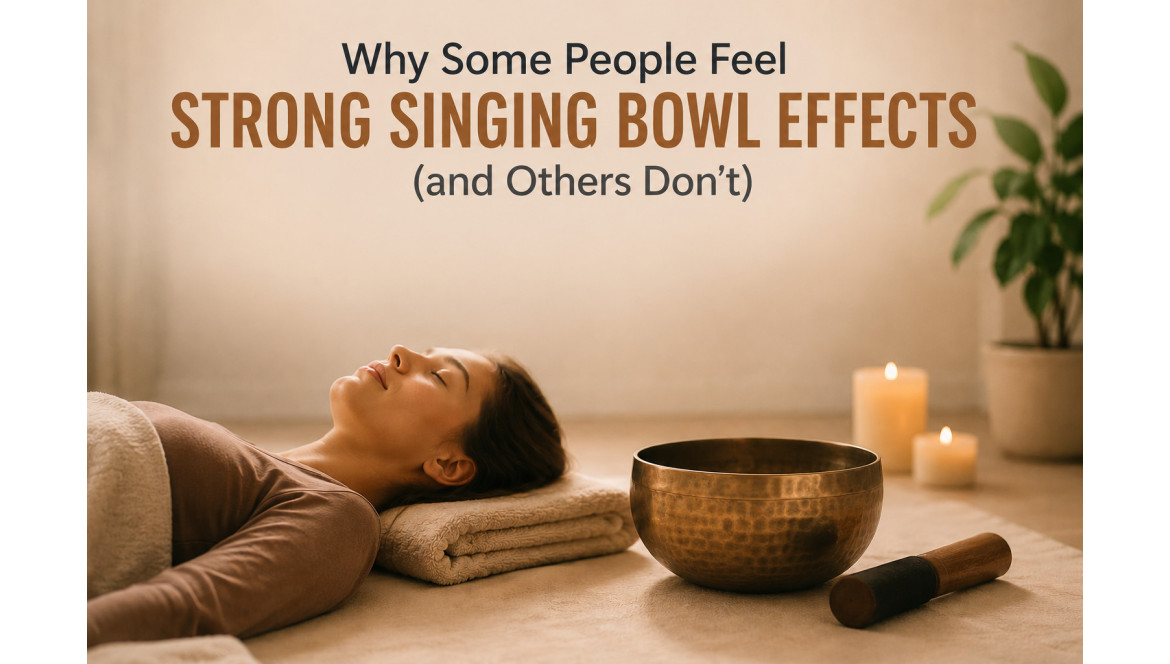
An evidence-based guide to why singing-bowl sessions feel different from one person to another, with realistic expectations and sound-safety advice.
Why Some People Feel Strong Singing Bowl Effects (and Others Don't)
Two people can attend the same sound bath and describe completely different experiences. One may feel deeply relaxed; another may feel neutral, distracted or uncomfortable. That difference does not prove that one person is more “open” than the other. It reflects a mix of context, attention, expectations, sound characteristics and individual sensory response.
What the Research Actually Shows
Research on singing-bowl interventions is growing, but it is still a small and heterogeneous field. It supports cautious language such as “may support short-term relaxation” rather than claims of guaranteed healing.
An observational study of 62 participants
A 2016 observational study reported lower self-rated tension, anger, fatigue and depressed mood immediately after a sound meditation. Participants who were new to the practice reported a larger reduction in tension than experienced participants.
The study had no silent or active control group, so it cannot show how much of the change came from the bowls rather than resting, the group setting, expectation or other parts of the session.
A randomized trial in 50 adults with high state anxiety
A 2023 randomized controlled trial compared one Tibetan singing-bowl session with progressive muscle relaxation and a waiting-list condition. Both active interventions reduced self-reported anxiety compared with waiting, and the singing-bowl group also showed changes in heart-rate variability and EEG measures during the session.
This is useful early evidence, but it involved one small sample and one short-term session. It does not establish a universal mechanism or a treatment for an anxiety disorder.
What systematic reviews conclude
A recent systematic review of clinical studies found promising results for some psychological and physiological outcomes, but also mixed findings, insufficient data and substantial differences between studies. Another systematic review rated much of the current evidence as low to moderate certainty.
The responsible conclusion is that singing-bowl sessions may help some people relax or feel better in the short term, while stronger medical claims require better trials.
Why Responses Differ
Starting state
A person arriving tense, tired or overstimulated may notice a larger contrast if the session feels calming. Another person who is already relaxed may experience a subtler change. The 2016 observational study found a different response between new and experienced participants, but it does not prove that baseline stress alone determines the result.
Attention and expectations
Attention changes how any listening experience is perceived. Focusing on the sound, breath or contact with the floor may make subtle changes easier to notice. High expectations can also work in both directions: they may increase anticipation, or make a moderate experience feel disappointing.
Placebo and contextual effects are not evidence that an experience is “fake.” They are reasons controlled trials are needed when making clinical claims.
Volume, distance and instrument character
A soft bowl several metres away is a different sensory event from a large gong or tingsha played nearby. Peak volume, repetition, room acoustics, duration and sudden changes can influence comfort. A facilitator should control intensity and avoid treating maximum volume as maximum benefit.
Hearing and sensory sensitivity
People differ in hearing range, tinnitus, migraine triggers, hyperacusis, sensory processing and tolerance for sustained or high-pitched sounds. A tone that feels clear and pleasant to one listener may feel sharp or fatiguing to another.
Setting and facilitator practice
Consent, the ability to change position or leave, clear explanations and gradual changes in intensity can make a session easier to receive. Feeling trapped, surprised by loud sound or pressured to report a spiritual experience can do the opposite.
Not Feeling an Effect Is a Valid Result
If a participant reports no change, it is not accurate to insist that hidden healing occurred below conscious awareness. The honest response is that the session did not produce a noticeable effect for that person at that time.
They may prefer a different volume, instrument, session length or relaxation method. They may also simply decide that sound baths are not useful for them.
When a Session Feels Uncomfortable
Discomfort can include ear pain, headache, agitation, dizziness, emotional distress or a strong desire to leave. These signals should be respected immediately.
- Reduce volume and increase distance from the instrument.
- Avoid sudden strikes close to the ears.
- Tell participants in advance that they may open their eyes, change position or leave.
- Use a gradual session arc with quiet intervals.
- For trauma-sensitive settings, avoid surprise, coercive language and claims that distress is a necessary “release.”
People with hearing conditions, sound-triggered symptoms or other medical concerns should seek individual guidance from an appropriate healthcare professional. A sound bath is a complementary wellness activity, not a substitute for diagnosis or treatment.
How to Approach a Sound Bath Realistically
- Choose a facilitator who explains the format and manages volume carefully.
- Sit farther from gongs or tingshas if you are sensitive to loud or high-frequency sound.
- Use a simple attention anchor such as breathing or contact with the floor.
- Do not force a particular emotional, energetic or spiritual interpretation.
- Judge the experience by how you actually feel, not by what you were told you should feel.
Frequently Asked Questions
Do singing bowls work for everyone?
No intervention produces the same response in everyone. Small studies suggest short-term benefits for some participants, but neutral or uncomfortable responses also occur.
Do singing bowls synchronize brainwaves?
A small EEG study of 17 participants observed increased activity at the beat frequency of one specific bowl. That experiment is interesting, but it does not show that every bowl reliably puts every listener into a particular brainwave state.
Does a stronger sensation mean more healing?
No. Intensity is not a validated measure of benefit. A comfortable, moderate session may be more appropriate than a dramatic one.
Can singing bowls treat anxiety or depression?
They should not be presented as a stand-alone treatment. Some studies report short-term changes in self-rated anxiety or mood, but people with persistent symptoms should use qualified medical or psychological care.
Bottom Line
Singing bowls may support relaxation for some people, but responses vary. The best explanation is not a single hidden mechanism; it is the interaction between the listener, the sound, the setting and the way the session is delivered.
This article is for general information and does not provide medical advice.
In Same Category
- Can You Place Singing Bowls on the Body? Safety and Best Practice
- Om Sajan Healing Center and Museum: Inside Kathmandu's Three-Floor Singing Bowl Sanctuary
- Handmade vs Machine-Made Singing Bowls: Key Differences
- Singing Bowl Mallet Guide: How to Choose the Right Mallet
- Why Do Tingshas Sound So Sharp and Clear?


Comments
No comment at this time!
Leave your comment