


Antique vs New Singing Bowls: Complete Buying Guide & Sound Differences
A detailed guide comparing antique, hand-hammered, and machine-made singing bowls, covering sound, materials, authenticity, and how to choose the right one.
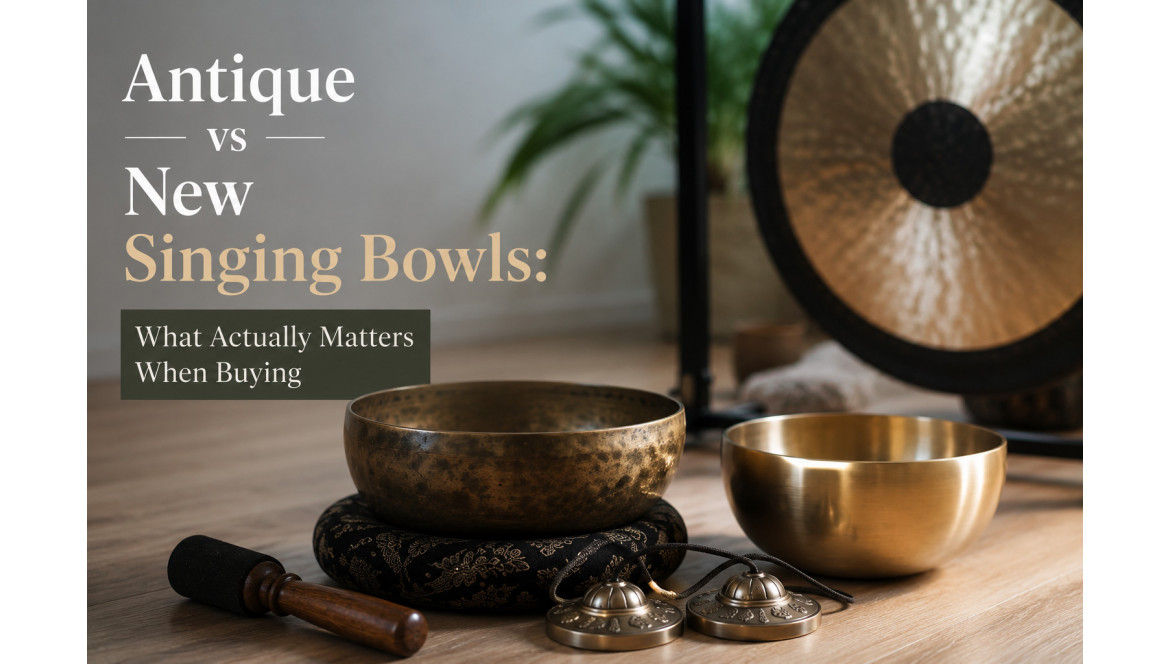
Antique vs New Singing Bowls: What Actually Matters When Buying
I have been working with singing bowls for as long as I can remember. I have bought them in Nepal, in actual markets, holding them, playing them, comparing them side by side. And the question I get asked most, both online and in person, is always the same:
Should I buy an antique bowl or a new one?
My honest answer: stop focusing on age. Focus on sound, material, and how the bowl feels in your hands.
Here is everything I have learned, including the things most sellers will never tell you. You can also read my guide on how to choose the perfect singing bowl
What "Antique" and "New" Actually Mean
A genuine antique singing bowl is at least 100 years old. Many are 200 to 300 years old. They were made entirely by hand, long before modern machines existed, mostly in Nepal, Tibet, and northern India.
New singing bowls come in two very different types, and understanding this distinction will save you from a bad purchase.
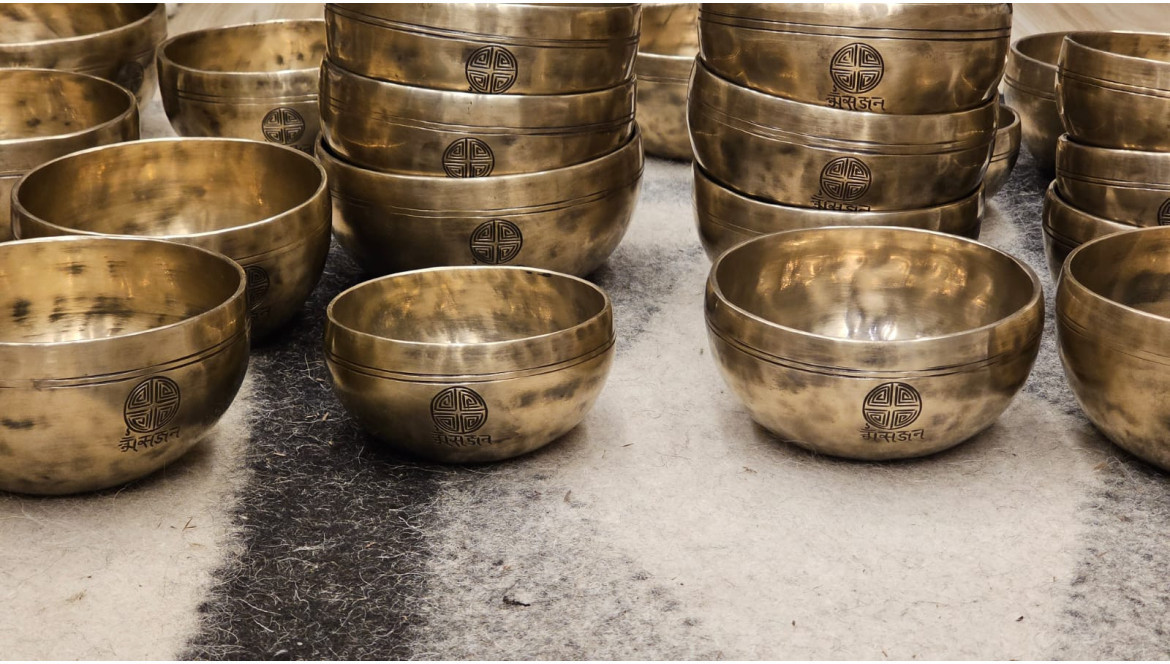
Hand-hammered new bowls are made today by skilled craftspeople using the same traditional techniques as antique bowls. Shaped by hand with a hammer, often from the same bronze alloy. A well-made hand-hammered bowl can be a genuinely excellent instrument.
Machine-made new bowls are produced in factories using moulds and lathes. Usually made from brass, a cheaper metal. They look very polished and perfect, but their sound is flatter and less interesting.
These three types - antique, new hand-hammered, and machine-made - are what you are really choosing between. Age alone tells you very little.
How They Actually Sound and Feel
This is where I can speak from direct experience.
When I first handled antique bowls in Nepal, two things surprised me. The sound was noticeably more balanced and soft compared to new bowls - not quieter, but more settled, like the tone knew where it was going. And the bowls themselves felt smoother in the hand. More comfortable to hold and play. Years of use had worn the metal in a way that felt almost intentional.
New bowls, even good hand-hammered ones, felt slightly rougher by comparison. The sound was brighter and more immediate, which has its uses, but it lacked that sense of depth.
Here is how each type breaks down:
Antique bowls produce a warm, soft, layered sound. The overtones - the extra tones you hear above the main note - blend together in a way that feels harmonically mature. The vibration is deep and surrounding. For personal meditation and close-body sound healing, this quality is hard to replicate.
New hand-hammered bowls are often louder and brighter. The ring can actually last longer than an antique of the same size. For group settings like yoga classes, sound baths, and large rooms, this clarity and projection is often more practical. A soft antique tone can get lost in ambient noise.
Machine-made bowls produce one clear tone with very few overtones. Easy to play, very uniform. But once you hear a quality hand-hammered bowl next to one, the flatness of the machine bowl becomes immediately obvious. Fine for beginners or decoration, not for serious practice.
The most important thing I learned: a top-quality new hand-hammered bowl will outperform a mediocre antique every time. Age does not rescue poor craftsmanship.
What Singing Bowls Are Made Of
Material is one of the biggest factors in sound quality, and one most buyers completely overlook.
Bell-metal bronze: the quality standard
The best antique bowls and the best new hand-hammered bowls are made from bell-metal bronze, an alloy of approximately 77 to 80% copper and 20 to 23% tin. This specific mixture creates rich, complex, long-lasting tones. It is also harder and more brittle than brass, which is why a genuine bronze bowl will crack if dropped. That brittleness is not a flaw. It is a sign of the correct alloy.
Brass: the cheaper alternative
Most machine-made bowls are made from brass - copper mixed with zinc. Softer, cheaper, easier to cast. You can often identify a brass bowl by its bright uniform golden colour and perfectly smooth finish. The sound is simpler and less resonant.
How to tell hand-hammered from machine-made
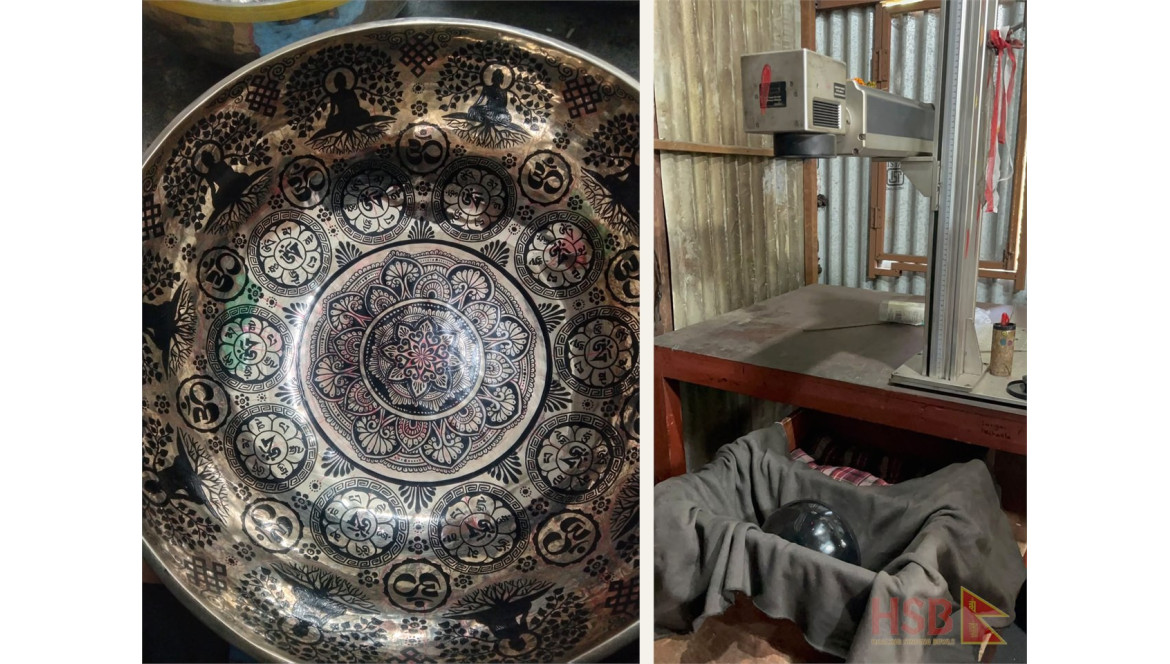
Look closely at the surface. Hand-hammered bowls show small, irregular, uneven marks from the hammer and no two look exactly the same. Machine-made bowls have a smooth interior with faint circular lathe lines and perfect visual uniformity. Those irregular hammer marks are not imperfections. They contribute directly to the bowl's unique sound.
The Truth About "Seven Sacred Metals"
Almost every seller - in Nepal, online, everywhere - will tell you that traditional singing bowls are made from seven sacred metals: gold, silver, copper, tin, iron, mercury, and lead, each representing a planet.
I heard this story many times while buying in Nepal. It sounds ancient and meaningful.
It is largely a myth.
Multiple independent scientific studies, including metallurgical analysis of over 100 bowls made between the 1500s and 1800s, found that antique singing bowls were made from only two metals: copper and tin. Traces of iron appeared in less than 2% of bowls tested. No gold or silver was found. The trace elements that do appear are impurities absorbed from the soil over centuries, not intentional ingredients.
The story appears to have spread in the 1960s as singing bowls began reaching Western markets for the first time. Some modern manufacturers now add small amounts of other metals to match the legend, but this is a recent marketing development, not an ancient tradition.
What this means for you: "Seven-metal bowl" is a marketing phrase. Do not pay extra for it. Sound quality comes from the copper-to-tin ratio and the skill of the maker, nothing else.
Price, Fakes, and How to Spot Them
Genuine antique bowls are rare historical objects as well as instruments. Their price reflects age, rarity, and collectability - not just acoustic quality. If you find a "genuine antique" at a suspiciously low price, be very sceptical.
The fake antique problem is widespread. I saw it firsthand in Nepalese markets. Many bowls sold as antique are new or only decades old, deliberately aged using acid baths, artificial patination, and fake wear patterns.
Here is how to tell the difference:
Genuine wear on an old bowl is random and uneven - scratches built up over centuries of real use going in every direction. Artificially aged bowls often show symmetrical or repetitive patterns because the aging process is applied uniformly. If the wear looks too consistent, walk away.
A trustworthy seller will give you a specific, conservative age estimate - not vague claims like "ancient" or "very old." They will describe condition honestly and allow returns if the sound does not match recordings.
How to Test Any Singing Bowl
Always judge a bowl by its sound. Not its age, not its appearance, not the story attached to it.
The strike test: tap the outside rim gently with the mallet. Listen for a clean clear attack, a long smooth sustain, and multiple tones layered above the main note. Avoid any bowl that buzzes, rattles, or whose sound collapses unevenly.
The singing test: run the mallet slowly around the outside rim while the bowl rests in your open palm. The tone should build gradually and hold steady without heavy pressure. If it chokes, wobbles badly, or stops, the bowl is not good quality.
The body test: hold the bowl after striking it and feel how the vibration travels through your hand and arm. A good bowl produces a vibration you can physically feel. For sound healing work, this matters as much as what you hear.
Buying online: always ask for a recording of that specific bowl, not a generic model sample. Request audio from multiple angles. Confirm you can return it if the sound does not match.
Which One Is Right for You?
Choose an antique bowl if you have experience with singing bowls and can genuinely feel the difference in warmth and balance, you want a single special instrument for deep personal practice, and you are buying from a reputable dealer who is transparent about age and condition.
Choose a new hand-hammered bowl if you want to select a specific note or pitch (you cannot do this with antiques - you get what exists), you are building a full set such as a 7-note chakra set, or you want excellent quality without the antique price.
Choose a machine-made bowl if you are a complete beginner, you want something for decoration or simple ritual, or budget is the deciding factor. Just know that once you hear a hand-hammered bowl, it is hard to go back.
Quick Comparison
| Antique | New Hand-Hammered | Machine-Made | |
|---|---|---|---|
| Sound | Warm, balanced, layered | Bright, clear, strong | Simple, flat |
| Feel in hand | Smooth, worn, comfortable | Slightly rougher | Uniform, impersonal |
| Material | Bell-metal bronze | Bronze or bell-metal | Usually brass |
| Note choice | Fixed, what exists | You choose | Standardised |
| Price | High | Mid to high | Low |
| Best for | Personal practice, collectors | Healers, teachers, serious students | Beginners, decor |
Before You Buy: A Simple Checklist
- Listen to the exact bowl, not a similar model
- Strike test: clean attack, long sustain, no buzzing
- Singing test: smooth build, no choking
- Ask what metal it is made from - bronze is the standard, brass is not
- Ask if it is hand-hammered or machine-made
- For antiques: ask for a specific age estimate and provenance
- For online purchases: request individual audio and confirm the return policy
- Ignore "seven-metal" claims unless supported by a lab certificate
Three years of working with these instruments has taught me one thing above everything else.
The best singing bowl is not the most expensive, the oldest, or the one with the best story attached to it.
It is the one that feels right in your hands and sounds right to your ears. In my experience, antique bowls have a softness and balance that is genuinely hard to find in new ones. But I have also played new hand-hammered bowls that stopped me completely.
Trust what you hear. Trust what you feel.
That is always the right answer.
In Same Category
- Can You Place Singing Bowls on the Body? Safety and Best Practice
- Om Sajan Healing Center and Museum: Inside Kathmandu's Three-Floor Singing Bowl Sanctuary
- Handmade vs Machine-Made Singing Bowls: Key Differences
- Singing Bowl Mallet Guide: How to Choose the Right Mallet
- Why Do Tingshas Sound So Sharp and Clear?


Comments
No comment at this time!
Leave your comment