


Striking vs Rimming Singing Bowls: When to Use Each Technique
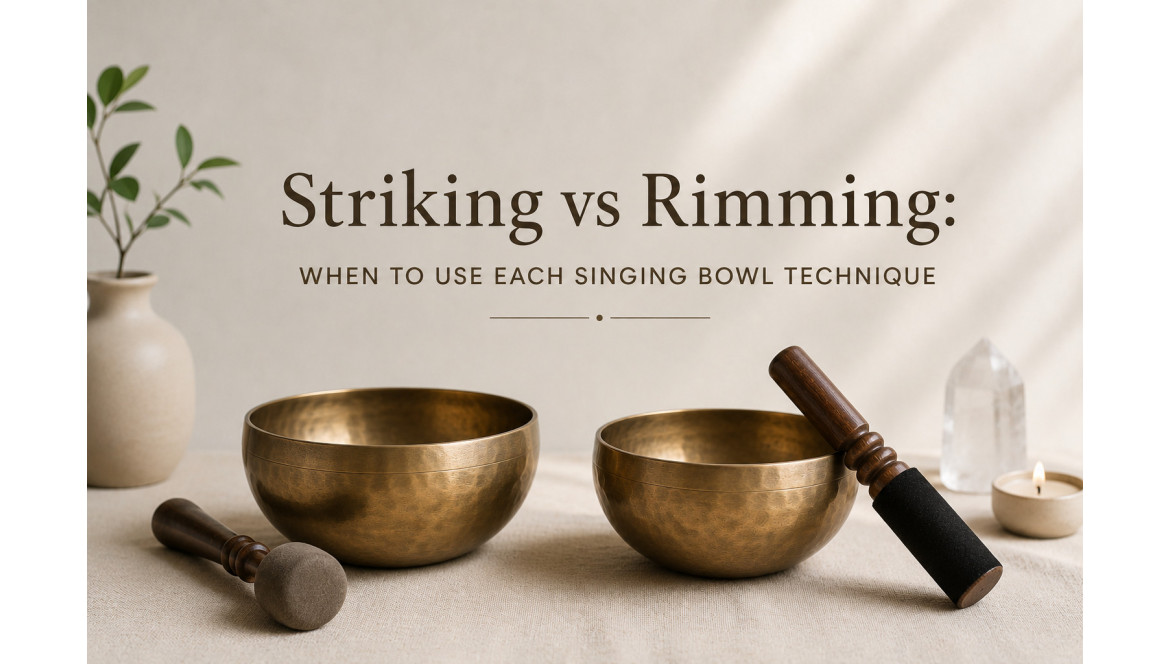
A complete guide to understanding the two core singing bowl techniques—striking and rimming. Explore how each method works, when to use them, common mistakes, and how to combine both for deeper meditation and sound healing experiences.
Striking vs Rimming: When to Use Each Singing Bowl Technique
The first time most people pick up a singing bowl, they tap it. A beautiful, bell-like tone rings out and slowly fades. Simple. Satisfying.
Then someone shows them how to rub the mallet around the rim - and suddenly the bowl starts to sing. A long, continuous hum fills the air and seems to vibrate everything around it.
Same bowl. Completely different experience.
These are the two main techniques in singing bowl practice - striking and rimming. Both are powerful. Both have their place. And knowing when to use each one will completely transform the quality of your sessions.
In this guide, you will learn:
- How each technique works and what it sounds like
- When to use striking and when to use rimming
- The most common mistakes and how to fix them
- How to combine both for a richer, more intentional practice
Two Primary Playing Techniques - A Quick Overview
Striking is tapping the bowl's side or rim with a mallet to produce a single, clear, resonant tone. It is immediate, defined, and easy to learn. Most beginners start here.
Rimming (also called rotating or singing) is rubbing the mallet around the outer rim in a steady circular motion to build a continuous, sustained sound. It takes more practice but creates those long, immersive tones you hear in sound baths.
Think of it this way - striking is like ringing a bell, rimming is like drawing a sound out of the bowl and letting it fill the entire room.
Striking - How It Works, How It Sounds, and When to Use It
How to Strike a Singing Bowl
Striking is simple, but small details make a big difference in the quality of sound you get.
- Rest the bowl on your flat palm or a cushion - do not grip the sides, as this dampens the vibration
- Hold the mallet loosely, like holding a pen - firm enough for control, relaxed enough to avoid a harsh impact
- Strike the mid-exterior wall just below the rim for the fullest, most resonant tone
- Striking higher, closer to the rim, gives more brightness and resonance
- Striking lower down the side produces a softer, less defined tone
- After striking, let the sound fully fade before striking again
For light taps on smaller bowls, you can try a compact felt head such as the Lollipop mallet, starting softly and adjusting your touch to the bowl.
What Striking Sounds and Feels Like
A good strike produces a clear, immediate tone with a rich resonance that swells briefly and then gradually fades. It is bell-like, defined, and clean.
The volume and brightness of the tone depend on:
- How hard you strike - softer strikes give a gentle, warm tone; harder strikes produce more volume and brightness
- The mallet you use - padded or suede mallets give a rounder sound, wooden mallets give a sharper attack
- Where you strike - closer to the rim gives fuller resonance, lower down gives a softer tone
When to Use Striking
Striking is best when you want clarity, definition, and structure. Use it for:
- Opening and closing sessions - a single, clear strike signals the beginning or end of a meditation, yoga class, or ritual beautifully
- Marking transitions - gentle strikes can guide movement between postures, breathing cycles, or different phases of a session
- Testing and comparing bowls - striking quickly reveals a bowl's fundamental tone, sustain, and clarity, making it ideal when selecting or demonstrating handcrafted singing bowls
- Rhythmic sound healing - striking multiple bowls in patterns creates dynamic waves of sound, great for group sound baths
- Working with beginners or sensitive clients - short, well-spaced strikes are easy to control and far less overwhelming for those new to sound healing
Rimming - How It Works, How It Sounds, and When to Use It
How to Rim a Singing Bowl
Rimming requires more patience and control than striking, but once you find the rhythm, the sound becomes almost effortless.
- Rest the bowl on your flat palm or a firm cushion so the rim can vibrate freely
- Place the mallet against the outer edge of the rim at a slight outward angle
- Begin moving the mallet slowly and smoothly around the rim using your full arm, not just the wrist
- Keep your pressure consistent all the way around - this is the key to a stable tone
- After a few revolutions, you will hear the sound "catch" and begin to build
- Helpful tip: start with a light strike first, then immediately begin circling to make it easier to catch the tone
What Rimming Sounds and Feels Like
Rimming produces a gradual build-up of sound. It starts as a soft whisper, then grows into a strong, stable tone that seems to vibrate the very air around you.
As you continue, you may notice:
- The tone becoming richer and more complex as overtones emerge
- A deeper, fuller sound appearing after several revolutions - often called the "female overtone"
- A sense of the sound wrapping around the listener like a sonic blanket
- Vibration that you can feel in your hand, chest, and body
When to Use Rimming
Rimming is best when you want depth, continuity, and immersion. Use it for:
- Deep meditation and long relaxation - the sustained tone gently holds attention and encourages the brain to slow down, making it ideal for yoga nidra and deep rest practices
- Sound baths and group sessions - rimming fills a room with resonance and creates a shared field of sound that every person in the space can feel
- Chakra and energy work - the continuous tone allows you to hold vibration over a specific body area or energy center for a longer, more focused period
- Creating a sound backdrop - rim one bowl quietly as a steady drone while occasionally striking others over the top for texture and variety
- Working with meditation bowls - full moon bowls respond especially well to rimming, producing long, pure, room-filling tones perfect for open spaces and group sessions
Side-by-Side Comparison - Striking vs Rimming
| Aspect | Striking | Rimming |
|---|---|---|
| Onset of sound | Instant, bell-like attack | Gradual build-up after a few revolutions |
| Duration | Medium sustain per strike | Long, continuous sustain while playing |
| Complexity | Clear fundamental with some overtones | Strong resonance with rich, pronounced overtones |
| Emotional feel | Clear, punctuated, spacious | Immersive, enveloping, hypnotic |
| Best use cases | Cues, transitions, rhythm, tone testing | Deep meditation, sound baths, energy work |
| Difficulty level | Beginner-friendly | Requires more control and practice |
Choosing the Right Technique for Your Purpose
For Personal Meditation at Home
- Use striking for short sessions, quick resets, or when you only have a few minutes
- Use rimming when you have more time and want to sink into a deeper, more immersive state
For Yoga Teachers and Facilitators
- Striking - gentle signals for starting class, guiding transitions between postures, or closing savasana
- Rimming - creating an ambient sound bed during longer holds, restorative poses, or at the opening and closing of class
For Sound Healers and Therapists
- Use striking to pace a session, invite awareness, and offer clear "reset" moments between different sequences
- Use rimming to hold energy around a client, deepen relaxation, and sustain vibration over specific areas or chakras
For Short Mindfulness Breaks or Office Use
- Favour striking with long pauses between tones - this avoids overwhelming a quiet environment while still offering a moment of pause and presence
Common Mistakes and How to Fix Them
Striking Mistakes
Hitting too hard - this creates a harsh, clanging sound instead of a warm, resonant tone. Fix it by softening your grip and using a padded mallet for gentler sessions.
Striking too frequently - not allowing the resonance to fully fade before striking again interrupts the natural flow of the sound. Let the tone breathe. The silence between strikes is part of the music.
Rimming Mistakes
Pressing too hard against the rim - this is the most common mistake. Too much pressure chokes the vibration and produces a scratchy, uneven sound or no tone at all. Ease off the pressure and slow your movement down.
Moving too fast - when you circle the rim too quickly, the tone never fully catches. Start slower than feels natural and let the sound build on its own.
Using the wrong mallet - a hard wooden mallet on certain bowls can produce a harsh, scratchy tone during rimming. Switch to a suede-wrapped or padded mallet for a smoother, fuller sound.
Combining Striking and Rimming in One Session
Strike to Awaken, Rim to Sustain
Start with a single, gentle strike to awaken the bowl. Then, as the tone is still ringing, transition smoothly into rimming to extend and amplify the sound.
This combination gives you both clarity and depth in a single gesture - the crisp attack of the strike followed by the expansive resonance of the rim.
Layering Multiple Bowls
- Keep one larger Himalayan singing bowl gently rimming as a drone in the background
- Strike smaller bowls softly over the top to add color, accent, and movement
- Choose bowls in complementary pitches so their resonances blend naturally
This creates a rich, evolving sound landscape that shifts and breathes throughout your session.
Creating a Journey in Sound Baths
Use striking to mark the phases of your session:
- Strike at the opening to call attention and presence
- Rim throughout the middle to build immersion and depth
- Strike again gently toward the close to signal the return
- End with one final strike and let the resonance fade completely into silence
Common Questions
Is it better to strike or rim a singing bowl?
Neither is better. They serve different purposes. Striking is best for clear cues, transitions, and short defined tones. Rimming is best for long, meditative soundscapes and deep immersion. The most powerful practice uses both.
Why does my bowl sound scratchy when I rim it?
This is almost always caused by too much pressure, inconsistent speed, or an unsuitable mallet. Try easing your pressure, slowing down, and switching to a suede-wrapped mallet.
Can I use the same mallet for both striking and rimming?
Yes, in most cases. However, many practitioners prefer a softer padded mallet for striking and a suede-wrapped mallet for rimming to get the smoothest sound from each technique.
Do crystal singing bowls need a different technique?
The principle is the same, but crystal bowls generally respond better to lighter pressure and silicone or rubber mallets. They are more sensitive to pressure changes and can produce an exceptionally pure, sustained tone when played with a gentle, steady hand.
Conclusion
Striking gives you clarity. Rimming gives you depth. Together, they give you everything.
Learning when to use each technique is not just a technical skill - it is how you begin to speak the language of the bowl. Every session, every client, every space calls for something slightly different, and the more fluent you become in both techniques, the more responsive and intentional your practice will be.
Start by experimenting. Strike your bowl and sit in the silence that follows. Then rim it and let the sound fill the room around you.
Notice how differently each one feels - in the space, in your body, and in the mood it creates. Explore our full range of handcrafted singing bowls to find the one that speaks to you.
In Same Category
- Can You Place Singing Bowls on the Body? Safety and Best Practice
- Om Sajan Healing Center and Museum: Inside Kathmandu's Three-Floor Singing Bowl Sanctuary
- Handmade vs Machine-Made Singing Bowls: Key Differences
- Singing Bowl Mallet Guide: How to Choose the Right Mallet
- Why Do Tingshas Sound So Sharp and Clear?


Comments
No comment at this time!
Leave your comment