


Introduction to Sound Therapy: Benefits of Singing Bowls for Beginners

A beginner-friendly guide to singing-bowl sound therapy: how the sound works, what research suggests, what remains traditional belief, and how to practise safely.
Sound therapy with singing bowls is commonly used as a relaxation and mindfulness practice. For a beginner, the simplest approach is also the most useful: play one bowl gently, listen closely, and allow silence between tones. This guide explains what singing bowls can realistically offer, what remains traditional belief, and how to begin safely.
What is sound therapy?
Sound therapy is a broad term. It may refer to clinical music therapy delivered by a qualified professional, to structured vibroacoustic methods, or to general wellness practices such as sound baths and singing-bowl meditation. These approaches should not be treated as interchangeable.
In a singing-bowl wellness session, sound is usually used to focus attention, mark transitions, and create a calm listening environment. People may report relaxation, reduced tension, or a meditative feeling. A bowl does not diagnose an imbalance or retune the body to a medically correct frequency.
How a singing bowl produces sound
When the bowl is struck or rubbed around the rim, its metal wall vibrates. Different vibration modes produce a fundamental tone and multiple overtones, creating the complex sound associated with handmade bowls. The sound travels through the air to the ear; if a bowl is placed on a safe area of the body by a trained practitioner, some vibration may also be felt through contact.
This acoustic explanation is enough to account for the sound. Claims that bowl frequencies penetrate organs, stimulate cells, repair tissue, or restore a universal body frequency have not been established by clinical research.
Potential benefits: what the research actually suggests
A small body of research has examined singing-bowl sessions. Some studies report short-term reductions in self-reported anxiety, tension, fatigue, or depressed mood. A randomized study of 50 adults found less acute anxiety after a single bowl session compared with progressive muscle relaxation and a control condition.
The limitations are important. A 2020 systematic review found only four eligible studies and concluded that the evidence was insufficient to recommend singing-bowl therapies clinically. A 2025 review identified more studies and described potential benefits for stress and well-being, but the methods were too heterogeneous for a meta-analysis and stronger trials are still needed.
- Randomized study on acute anxiety and relaxation
- Observational study of mood after sound meditation
- 2020 systematic review
- 2025 systematic review
Responsible wording is therefore: singing-bowl listening may support relaxation, and some participants in small studies reported less anxiety or tension after a session. It is not accurate to promise lower cortisol, cellular repair, trauma release, pain treatment, or improved sleep disorders.
Chakras and energy language
Many practitioners associate singing bowls with chakras, prana, Qi, or energy balancing. These concepts belong to spiritual and traditional frameworks. They can give a practice personal meaning, but they are not clinically measured anatomy.
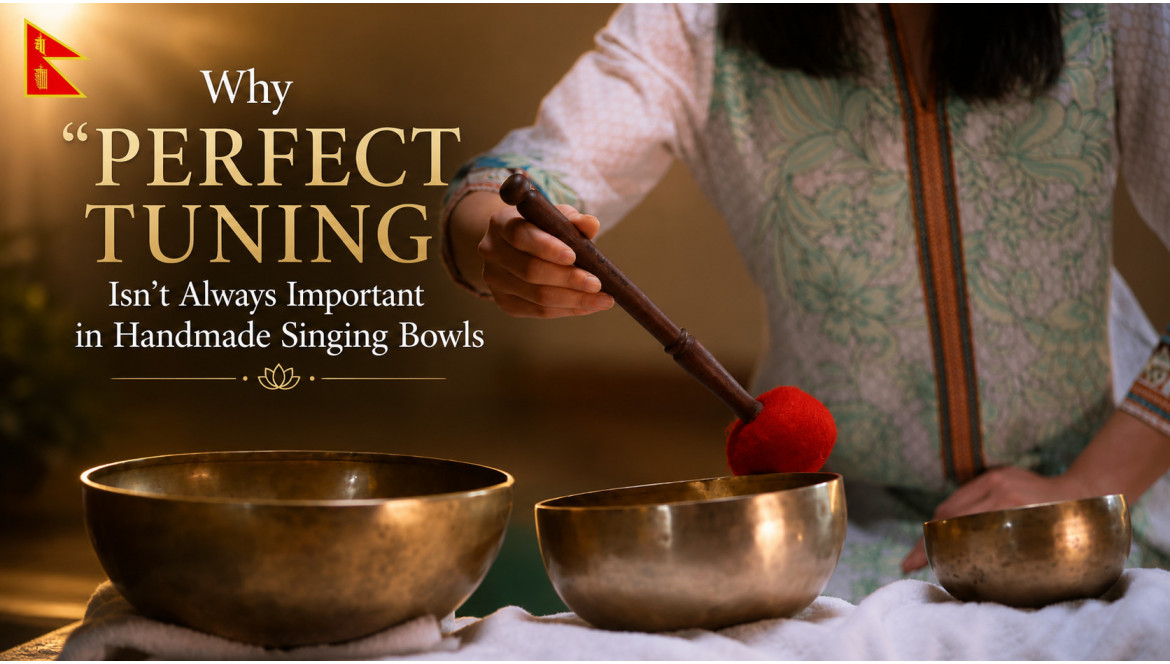
A handmade bowl also produces several frequencies rather than one perfectly fixed “healing frequency.” There is no universal scientific mapping that proves one musical note treats a particular organ or chakra. If you use those associations, present them as part of a tradition or personal practice.
A simple five-minute practice for beginners
- Set the bowl securely. Place it on a cushion or stable, non-slip surface.
- Sit comfortably. Keep the bowl at least an arm’s length from your ears.
- Strike gently. Use a padded mallet and avoid a sudden, hard impact.
- Listen to the full decay. Notice the changing overtones until the sound disappears.
- Pause in silence. Take one or two natural breaths before playing again.
Three to five tones are enough. The purpose is attentive listening, not maximum volume or constant vibration.
Using a bowl for meditation or an evening routine
For meditation, use one tone to begin and one to finish. During the quiet period, return your attention to breathing whenever the mind wanders. For an evening routine, keep the volume low and the session brief. A relaxing ritual may help you wind down, but persistent sleep problems should be discussed with a health professional.
Safety basics
- Do not play loudly or close to the ears.
- Stop if the sound causes pain, dizziness, distress, or sensory overload.
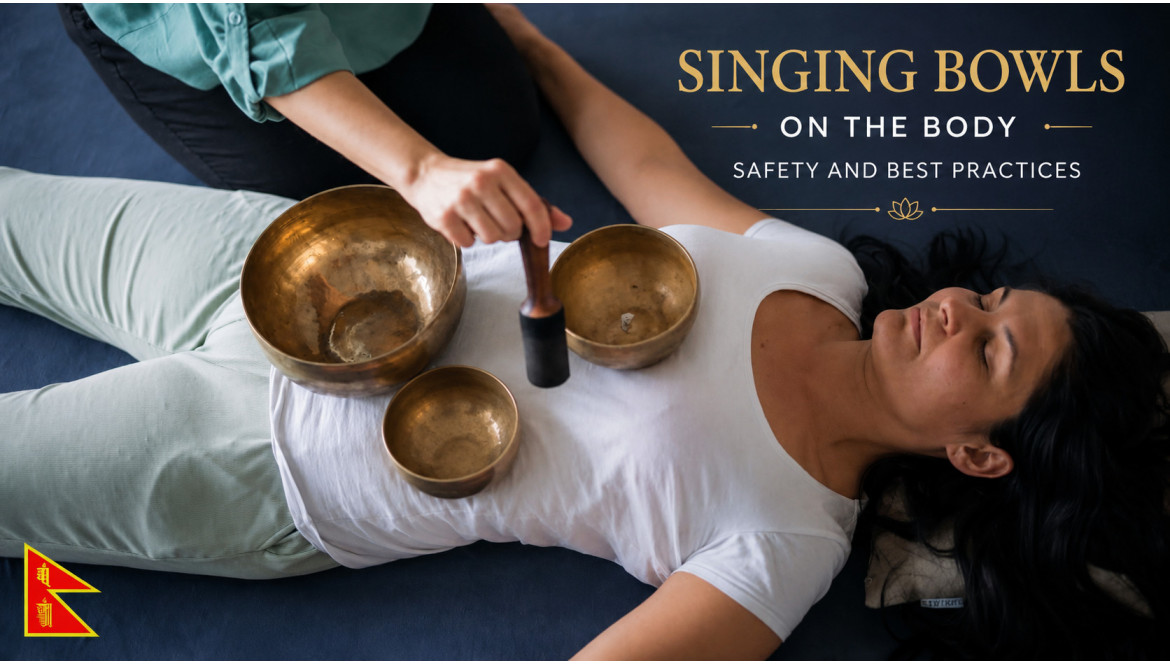
- Never place or strike a bowl on the head, face, throat, abdomen during pregnancy, or over a recent injury or surgical site.
- Body placement requires specific training, informed consent, and appropriate screening.
- Do not use a singing bowl in place of medical or mental-health care.
Choosing your first singing bowl
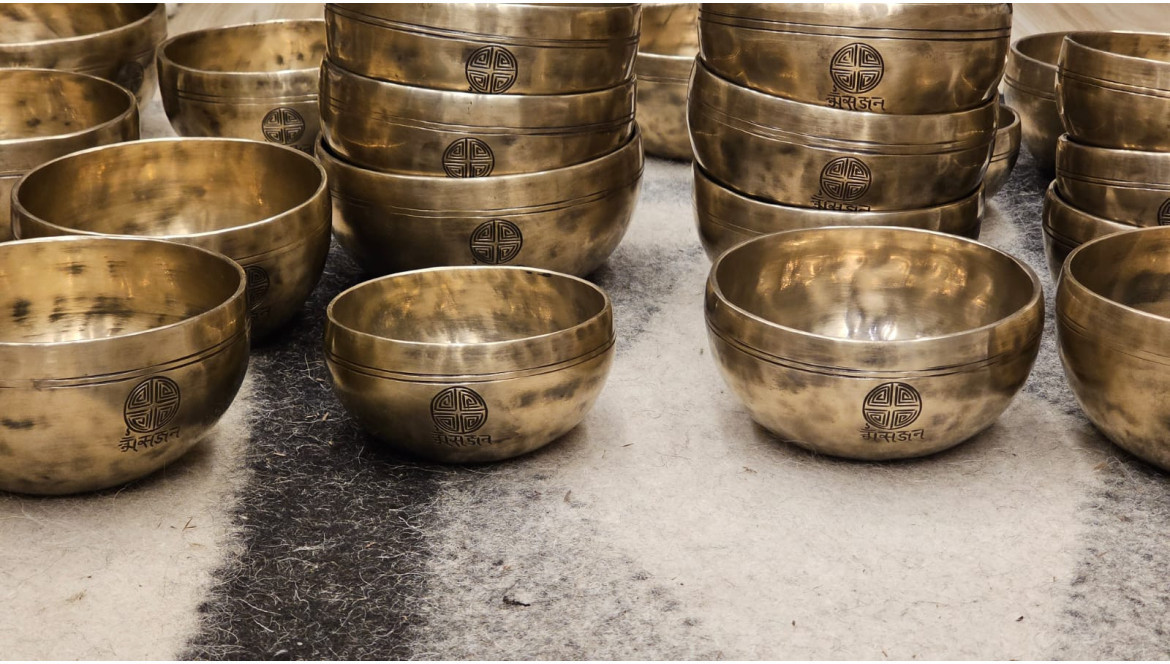
Choose by listening rather than chasing a supposedly perfect therapeutic note. Look for a tone you enjoy, a comfortable size, stable resonance, and a mallet suited to the bowl. Handmade bowls naturally vary; that variation is part of their character.
If you need help comparing sizes and sounds, explore our handmade singing bowls or contact HSB for practical selection guidance.
Medical disclaimer: This article offers educational and general wellness information. Singing bowls are not a medical treatment and should not replace diagnosis, medication, psychotherapy, or other care from a qualified professional.
About Sajan Shakya
Sajan Shakya is the HSB contact responsible for customer support, digital development and international coordination. He comes from a Newar family of singing-bowl makers and has a background in information technology. Through Healing Singing Bowls and its online shop, he helped open the family workshop to international customers. Learn more about the HSB team and the HSB workshop in Kathmandu Valley.
In Same Category
- Can You Place Singing Bowls on the Body? Safety and Best Practice
- Om Sajan Healing Center and Museum: Inside Kathmandu's Three-Floor Singing Bowl Sanctuary
- Tingshas vs Singing Bowls: Which Sound Healing Tool Should You Use?
- Handmade vs Machine-Made Singing Bowls: Key Differences
- Singing Bowl Mallet Guide: How to Choose the Right Mallet


Comments
No comment at this time!
Leave your comment