


Are Singing Bowls Really Ancient Tibetan Instruments? History & Truth Explained

A detailed historical analysis of singing bowls, their origins, cultural evolution, and why they are often misrepresented as ancient Tibetan instruments.
Are Singing Bowls Really Ancient Tibetan Instruments?
Walk into almost any wellness studio, yoga retreat, or spiritual marketplace and you will find them: gleaming metal bowls sold as ancient Tibetan instruments, said to carry centuries of Buddhist wisdom and healing power. But the true history of "Tibetan singing bowls" is far more complicated, and far more interesting, than the label suggests.
What Scholars and Tibetan Buddhists Actually Say
If you ask academic researchers or Tibetan Buddhist practitioners whether singing bowls are clearly attested as ritual instruments in classical Tibetan Buddhist liturgy, the answer is consistent: they do not appear in the major documented records of Tibetan ceremonial practice.
In 1988, ethnomusicologist Daniel Scheidegger published a comprehensive survey of Tibetan music, cataloguing dozens of instruments used in ceremonial life: hand drums (damaru), horns, cymbals, and hand bells (drilbu). Singing bowls are not mentioned in this work. It is worth noting that ethnomusicological catalogues, however thorough, are not exhaustive inventories of every object ever used in a region, particularly in domestic, lay, or non-canonical contexts where material culture was often transmitted locally and orally. The stronger claim here is this: singing bowls are not documented in major catalogues of Tibetan ritual instruments, and historical accounts of Tibetan music from the early 1900s similarly make no mention of them in ceremonial use.
Tibetan monasteries use tingshas (small paired cymbals), hand bells, drums, and horns. Singing bowls as marketed in the West do not appear in documented Tibetan liturgical manuals or ceremonies. Metal bowls did exist in Himalayan and Tibetan domestic life, but the evidence points to everyday use rather than a ritual or healing function.
A peer-reviewed study published in a leading humanities journal concluded that "few if any" of these objects are actually ancient or Tibetan, and that beginning in the 1970s, Asian and American sellers and Western buyers together created the concept of "Tibetan Singing Bowls," investing them with spiritual-scientific meanings that made them into valuable commodities. The careful position, supported by available evidence, is not that singing bowls were definitively never present anywhere in the Himalayan region, but that the specific identity marketed in the West - ancient, Tibetan, and ceremonially used for healing - is not supported by the historical record.
So Where Do They Actually Come From?
The honest answer involves three overlapping histories: standing bells from East Asia, metal bowls from the Himalayan region, and a very modern Western wellness movement.
Standing Bells: An East Asian Tradition
A singing bowl is technically a type of standing bell - an inverted bell that rests with its rim facing upward and is played by striking or rubbing the rim to produce a sustained tone. This instrument form has deep roots in China, Japan, and Burma. Japanese rin or keisu bells, used in Zen and other traditions to punctuate chanting and meditation, are the most recognizable example. Modern "singing bowls" belong to this same broad family of East Asian standing bells.
Metal Bowls in the Himalayas: Primarily Everyday Objects
Metal bowls definitely existed in Himalayan and Tibetan culture. Research into documented uses of copper alloy bowls in Nepal and Tibet prior to 1950 found they were used primarily for storage of water and grains, as cups and bowls, and commonly as dowry or wedding gifts. References to bowls specifically in connection with sound or healing are comparatively rare in pre-modern sources. This does not rule out informal or local uses that were never written down, but it does mean the evidence weighs toward domestic function rather than formalised ritual or therapeutic use.
Nepal: The Real Hub of the Craft
Most historians and experts now agree that singing bowls originated in Nepal and Northern India, particularly in the Himalayan regions. In Nepal, these bowls are called "dabaka," "bati," or "bata" - words that simply mean "bowl" in Nepali, suggesting they were everyday items rather than exclusively spiritual tools.
The precious metals used in making the bowls are not naturally found in Tibet. Many bowls marketed as Tibetan were actually made in Nepal, often from materials that originated in Tibet and were then sent over the Himalayas. The Nepalese language having specific words for these instruments further supports Nepal's central role in the tradition.
The term "Tibetan singing bowls" became synonymous with the instruments largely because dealers historically marketed the bowls as Tibetan to mark them as more valued products, according to sound healers who have researched the trade directly.
The "Ancient Tibetan" Origin Story: Where It Came From
The Romantic Myth
Many wellness and commercial sources claim singing bowls date back to 560 to 480 BCE, the era of the Buddha, or even to pre-Buddhist Bon shamanic rituals. Some add that the knowledge was kept strictly oral and only revealed when Tibetans fled the Chinese invasion in the 1950s.
This narrative is compelling. It is also unsupported by evidence.
The stories are shrouded in mystery and secrecy, transmitted orally and therefore lacking a written record, invoke the supernatural, and are often attributed to fringe groups. As scholar Donald Lopez, Jr. has written, Tibet has long been depicted as being "from an eternal classical age, set high in a Himalayan keep outside time and history," a place that "embodies the spiritual and ancient." Variations of the singing bowl origin myths have found their way into publications as prestigious as the Guardian and the Oxford Handbook of Medical Ethnomusicology.
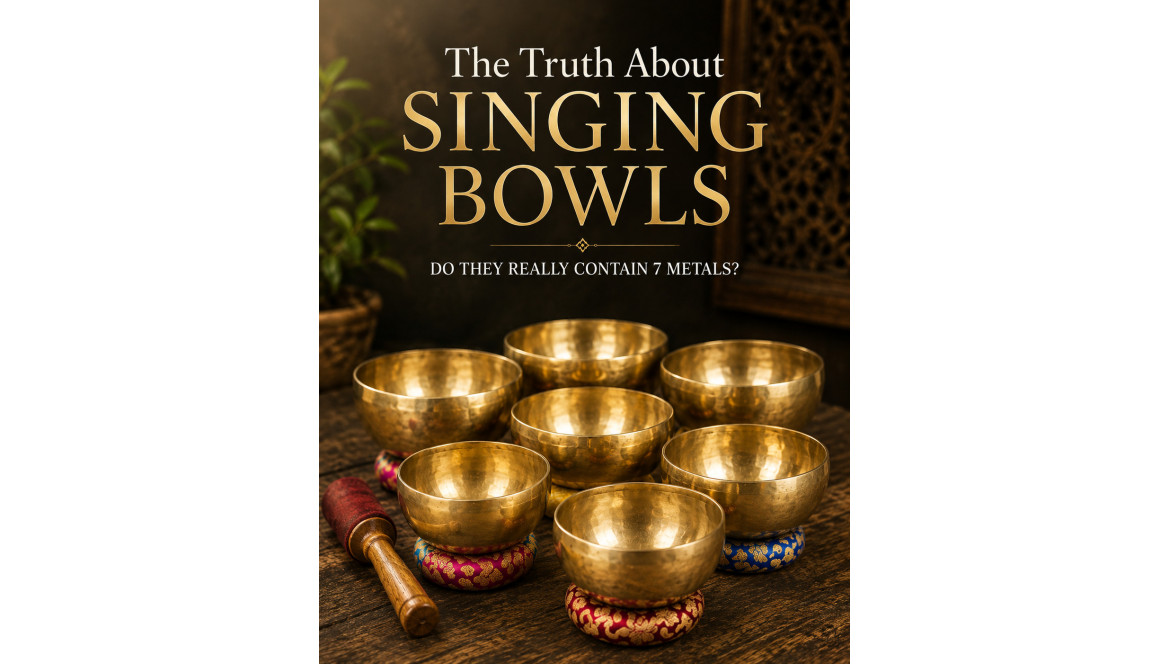
The "seven sacred metals" story - the claim that traditional bowls were made from a blend of gold, silver, mercury, copper, iron, tin, and lead - is similarly romantic, but metallurgical analyses of more than 100 ancient bowls show they are made primarily of a bronze alloy of copper and tin, sometimes with a little iron, not seven metals.
What the Evidence Does Support
One more nuanced claim has stronger footing: archaeological metallurgists at Oxford University have examined antique singing bowls and found that early specimens are metallurgically related to ancient Persian and Khorasan bowls from the 9th to 12th centuries, featuring similar engravings and a unique method of folding the metal. This connection suggests the Silk Road trading network may have been the conduit through which Mesopotamian metalworking technology arrived in the Himalayan region. This is speculative but at least grounded in physical analysis rather than oral tradition alone.
How "Tibetan Singing Bowls" Became a Western Phenomenon
The modern identity of "Tibetan singing bowls" was largely constructed in the West, beginning in a very specific era.
The "Tibetan" branding largely emerged in the 1960s and 70s, when interest in Eastern spirituality surged in Western countries and travelers encountered metal bowls in Himalayan markets.
A key milestone was the 1972 album Tibetan Bells by Henry Wolff and Nancy Hennings. It was the first recording to use Tibetan bells and singing bowls, and it helped establish some of the fundamentals of new-age music. In 1969, Wolff and Hennings had traveled to India and Nepal, where they studied with the Kagyu branch of Tibetan Buddhism and discovered the sounds of the Tibetan bells. Their resulting album led to a succession of recordings featuring these instruments.
During this era, Tibet as a symbol carried enormous cultural weight, seen as a pure, mystical, and threatened civilization. Adding "Tibetan" to an object made it more exotic and spiritually credible to Western audiences.
By the 1980s and 1990s, sound therapy and vibrational medicine were growing trends, and bowls moved from interesting instrument to healing technology. Workshops, websites, and books began attributing specific chakra-tuning properties and brainwave effects to the bowls, almost entirely without historical basis.
A Quick Fact-Check Summary
| Claim | Verdict |
|---|---|
| Singing bowls are ancient Tibetan ritual instruments | Not supported by the historical record |
| They date to the time of the Buddha (560 to 480 BCE) | No archaeological or textual evidence |
| Traditional bowls contain seven sacred metals | Metallurgical analysis shows primarily bronze |
| They were used as sound-healing devices in Tibet | No evidence; practice emerged in the late 20th century |
| Most bowls are crafted in Nepal, not Tibet | Confirmed by multiple sources and the trade itself |
| The "Tibetan" label is largely a marketing construct | Confirmed by scholars, dealers, and Tibetan practitioners |
| The bowls belong to a broader East Asian standing-bell family | Supported by instrument history |
| The modern sound-healing practice emerged in the West from the 1970s onward | Well-documented |
Why the Label Matters
This is more than a historical footnote. Tibetan and Buddhist scholars raise several substantive concerns about the "ancient Tibetan" framing.
Misrepresentation of Tibetan Buddhism. Presenting singing bowls as authentic Tibetan ritual instruments gives practitioners and clients a false picture of what traditional Tibetan Buddhist practice actually involves, overshadowing real instruments and rituals that do have centuries of documented history.
Cultural credit going to the wrong place. Labeling Nepali-crafted bowls as "Tibetan" erases the labor and heritage of Nepali and North Indian artisans, the people who actually made and developed these objects, while profiting from Tibet's spiritual reputation.
Invented authority. When practitioners claim to offer "ancient Tibetan sound healing," they are implicitly claiming a lineage that Tibetan lamas and communities themselves do not recognize.
None of this means that singing bowls lack value or that sound-bath practices are meaningless. Many people find them genuinely calming and restorative, and early research is exploring their relaxation effects. The point is honesty about what they are.
Frequently Asked Questions
Are singing bowls used in actual Tibetan Buddhist monasteries?
Traditional Tibetan Buddhist monasteries use instruments including hand bells (drilbu), damaru drums, horns, cymbals, and tingshas. Singing bowls as used in Western wellness contexts are not part of documented Tibetan Buddhist liturgy or ritual manuals.
Where should I buy a singing bowl?
Nepal, and specifically the Kathmandu Valley, is the historical and contemporary center of singing bowl craft. Bowls described as "Nepali" or "Himalayan" are, in most cases, more accurately labeled than those described as "Tibetan."
Are hand-hammered bowls better than machine-made ones?
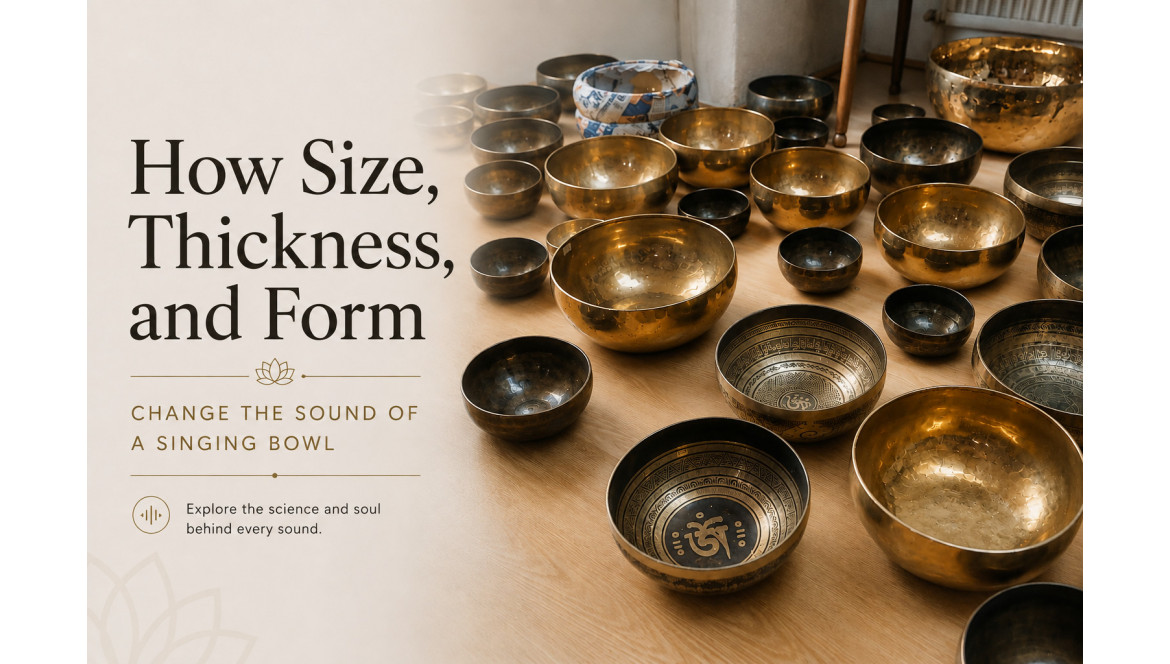
Hand-hammered bowls are made by repeatedly heating and hammering metal into shape, producing thicker walls and more complex, layered overtones. Machine-made bowls are more uniform and consistent but generally considered less acoustically rich by practitioners and musicians.
What is a singing bowl actually made of?
Despite the popular "seven metals" story, metallurgical analysis of over 100 antique bowls shows they are primarily bronze, an alloy of copper and tin, sometimes with traces of iron. Some bowls include additional metals, but the exact formulation varies widely and modern bowls are often simpler alloys.
Does it matter what I call them?
Many Buddhist scholars and Tibetan practitioners suggest more accurate language: "Himalayan singing bowls," "Nepali singing bowls," or simply "singing bowls," and recommend being clear that modern sound-bath practices are contemporary, syncretic traditions rather than direct lineages from old Tibet.
Conclusion
The metal singing bowl is a real object with a real history, rooted in East Asian standing-bell traditions, refined by Nepali and Himalayan artisans over centuries, and brought to Western audiences by spiritual travelers in the early 1970s. The sounds these bowls produce are genuine, and the relaxation people experience from them is real.
What is not supported by evidence is the specific claim that they are ancient Tibetan instruments carrying thousands of years of Buddhist healing wisdom. That story was built through tourism, New Age marketing, and a Western romanticization of Tibet that scholars have been carefully unraveling for decades.
Understanding the actual history does not diminish the bowls. It simply gives them, and the cultures that made them, the honest credit they deserve.
In Same Category
- Can You Place Singing Bowls on the Body? Safety and Best Practice
- Om Sajan Healing Center and Museum: Inside Kathmandu's Three-Floor Singing Bowl Sanctuary
- Tingshas vs Singing Bowls: Which Sound Healing Tool Should You Use?
- Handmade vs Machine-Made Singing Bowls: Key Differences
- Singing Bowl Mallet Guide: How to Choose the Right Mallet


Comments
No comment at this time!
Leave your comment