


7-Bowl Tibetan Singing Bowl Set Guide
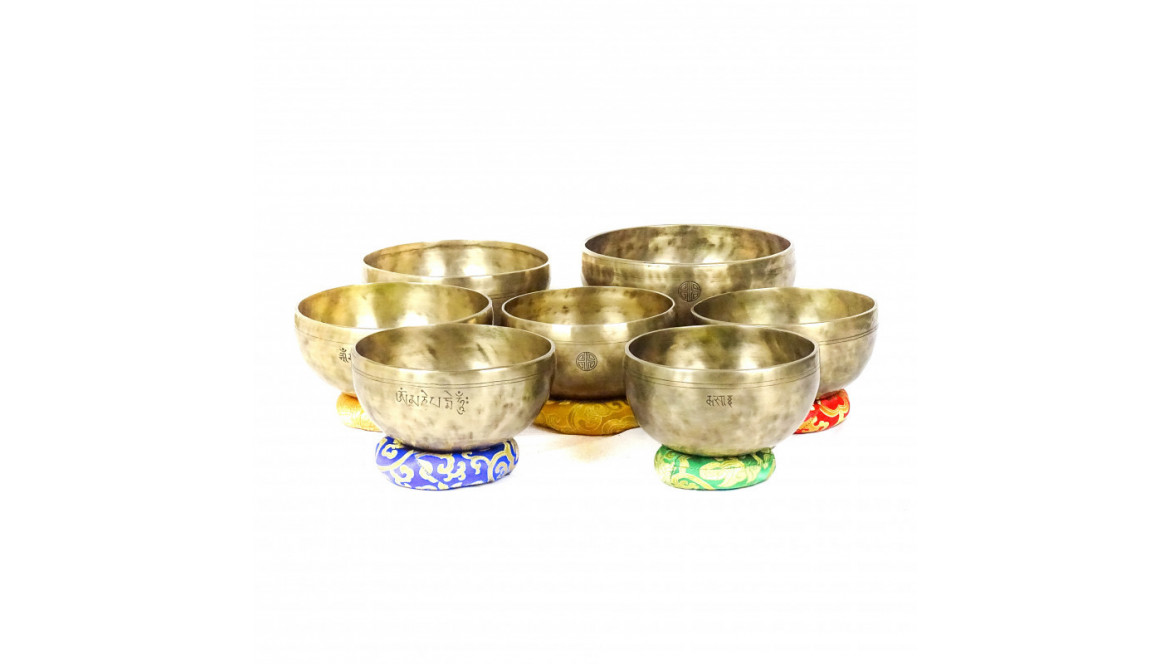
Discover how to build a harmonious 7-bowl Tibetan singing bowl set for chakra meditation and sound therapy. Learn frequency tuning, bowl selection, and testing techniques to create a balanced, therapeutic sound experience.
The Complete Guide to Building a 7-Bowl Tibetan Singing Bowl Set
A Tibetan singing bowl set used for sound therapy is more than just a collection of bowls. Each bowl must vibrate within a specific frequency range so that the entire set produces a harmonious progression of notes corresponding to the seven chakras.
Many online guides oversimplify the process, but in reality, building a properly balanced 7-chakra singing bowl set requires understanding frequency tolerances, octave selection, and how the bowls interact when played in sequence.
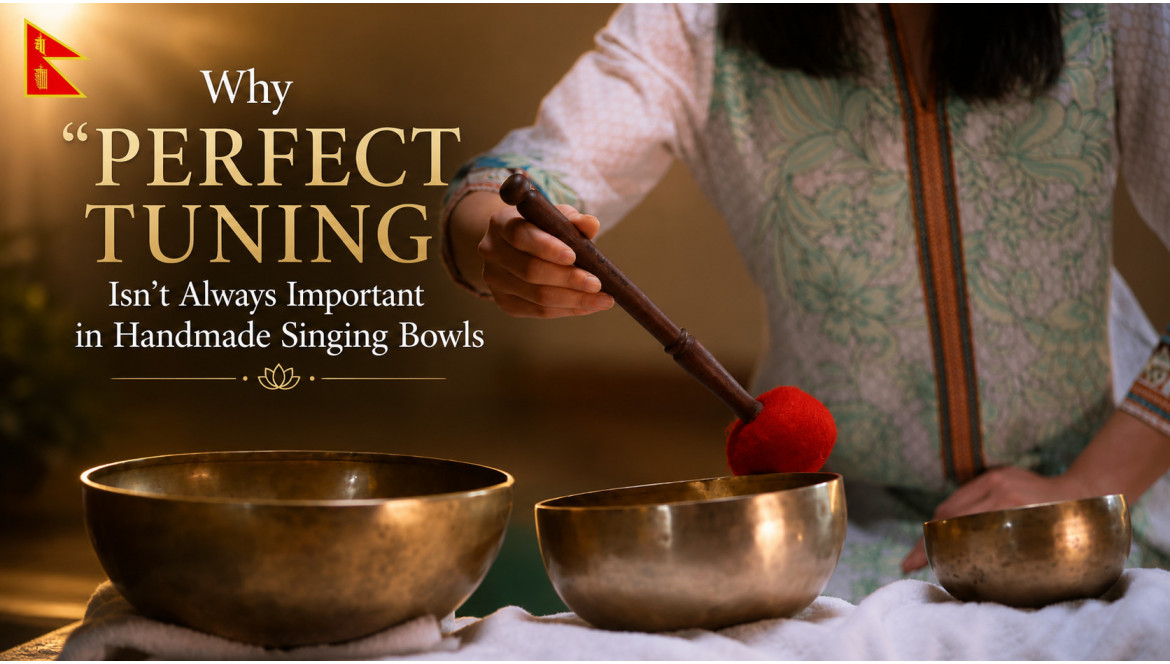
Authentic handmade Tibetan singing bowls from Nepal are not produced with laboratory-level precision. Craftsmen focus more on resonance, tone, and sustain rather than exact tuning. To select a harmonious set, a practical framework is necessary.
This guide explains how experienced sound therapists build consistent 7-bowl sets for meditation and chakra sound healing.
Why Use a 7-Bowl Tibetan Singing Bowl Set?
A traditional chakra singing bowl set follows a simple principle: each bowl represents one note of the diatonic scale. These seven notes correspond to the seven chakras, allowing the energy system to be activated sequentially during meditation or sound therapy sessions.
- C – Root Chakra
- D – Sacral Chakra
- E – Solar Plexus Chakra
- F – Heart Chakra
- G – Throat Chakra
- A – Third Eye Chakra
- B – Crown Chakra
Most practitioners prefer octave 2 bowls, as they provide deep, resonant tones suitable for meditation and therapeutic work.
Tibetan Singing Bowl Frequency Chart (Octave 2)
| Note | Chakra | Target Frequency |
|---|---|---|
| C | Root Chakra | 131 Hz |
| D | Sacral Chakra | 145 Hz |
| E | Solar Plexus Chakra | 165 Hz |
| F | Heart Chakra | 175 Hz |
| G | Throat Chakra | 196 Hz |
| A | Third Eye Chakra | 220 Hz |
| B | Crown Chakra | 247 Hz |
These frequencies are reference values. In practice, bowls rarely match them exactly. Therefore, practitioners use frequency tolerance ranges when selecting chakra sets.
Step 1: Apply the 97% Accuracy Rule
Each bowl should fall within ±3% of its target frequency to represent the intended note.
| Note | Chakra | Min | Max |
|---|---|---|---|
| C | Root Chakra | 127 Hz | 135 Hz |
| D | Sacral Chakra | 141 Hz | 149 Hz |
| E | Solar Plexus Chakra | 160 Hz | 170 Hz |
| F | Heart Chakra | 170 Hz | 180 Hz |
| G | Throat Chakra | 190 Hz | 202 Hz |
| A | Third Eye Chakra | 213 Hz | 226 Hz |
| B | Crown Chakra | 240 Hz | 254 Hz |
Step 2: Solve the Semitone Boundary Problem
At semitone boundaries (E-F, B-C), apply a stricter accuracy threshold of 98.5% to avoid overlap. This ensures each bowl clearly represents its intended note.
Updated Singing Bowl Frequency Ranges
| Note | Chakra | Min | Max |
|---|---|---|---|
| C | Root Chakra | 129 Hz | 135 Hz |
| D | Sacral Chakra | 141 Hz | 149 Hz |
| E | Solar Plexus Chakra | 160 Hz | 167 Hz |
| F | Heart Chakra | 173 Hz | 180 Hz |
| G | Throat Chakra | 190 Hz | 202 Hz |
| A | Third Eye Chakra | 213 Hz | 226 Hz |
| B | Crown Chakra | 240 Hz | 251 Hz |
Step 3: Ensure Consistency Across the Set
Even if each bowl falls within its range, maintain a maximum deviation of 2.5% between adjacent bowls to ensure a smooth tonal progression.
How to Measure Singing Bowl Frequencies
Common tools include:
- Chromatic tuner apps
- Audio spectrum analyzer apps
- Digital instrument tuners
Measurements may vary slightly depending on microphone sensitivity, room acoustics, and striking force, which is why tolerance ranges are important.
Can This Method Be Applied to Other Singing Bowl Sets?
Yes, these principles apply to other configurations such as 4-bowl, 8-bowl, or 12-bowl sets. Always use reasonable frequency tolerances, avoid semitone overlap, and maintain consistent deviation between adjacent bowls.
Frequently Asked Questions
Which octave is best for Tibetan singing bowls?
Octave 2 is ideal for sound therapy, offering deep resonance while remaining audible during meditation.
How many bowls are needed for a chakra set?
Seven bowls are sufficient, each corresponding to one note and one chakra.
Can bowls from different makers be used in one set?
Yes, but frequency deviations must be checked to ensure a smooth and harmonious set.
Are Tibetan singing bowls tuned to exact notes?
No, handmade bowls typically fall within a frequency range rather than being precisely tuned.
Conclusion
To build a balanced 7-bowl Tibetan singing bowl set:
- Select bowls within the correct frequency ranges for each note
- Apply stricter accuracy at semitone boundaries
- Maintain consistent deviation between adjacent bowls
By following these guidelines, you can create a consistent singing bowl set that produces a harmonious progression of sound for meditation and sound healing sessions.
In Same Category
- Can You Place Singing Bowls on the Body? Safety and Best Practice
- Om Sajan Healing Center and Museum: Inside Kathmandu's Three-Floor Singing Bowl Sanctuary
- Handmade vs Machine-Made Singing Bowls: Key Differences
- Singing Bowl Mallet Guide: How to Choose the Right Mallet
- Why Do Tingshas Sound So Sharp and Clear?


Comments
No comment at this time!
Leave your comment