


Why Hammering Is Key to Every Singing Bowl’s Unique Sound

Discover how traditional hand-hammering shapes the sound, resonance, and harmonics of Tibetan singing bowls, making each instrument truly unique.
Why Hammering Is the Secret Behind Singing Bowl Sound
Why do singing bowls sound different?
Singing bowls sound different due to variations in hammering technique, internal tension, wall thickness, and alloy composition. Among these, hammering is the most critical factor shaping resonance, sustain, and overtone complexity.
Most people focus on the metal, age, or engravings, but the real story lives on the surface—in every hammer mark, ridge, and imperfection left by the craftsman’s hand.
What Makes Singing Bowls Sound Different?
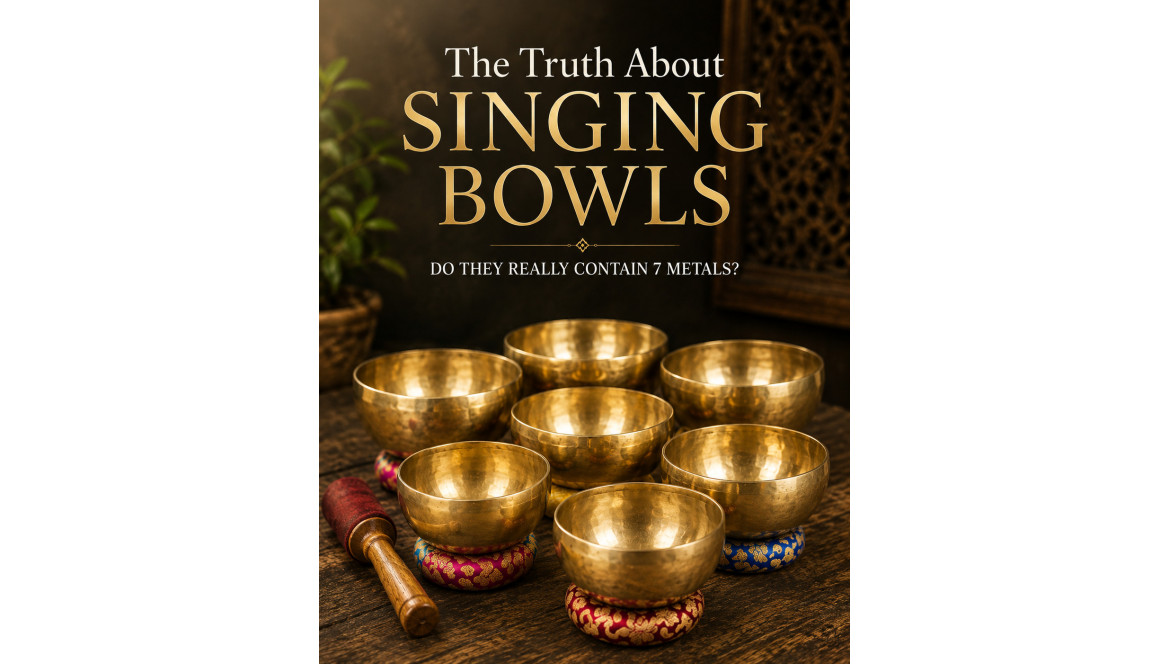
Traditional singing bowls are made from a multi-metal alloy, often called a seven-metal blend. While this alloy contributes to tonal warmth, it does not fully explain why two bowls made from the same material can sound completely different.
The defining variable is hammering—a labor-intensive forging process that physically and acoustically transforms the metal.
The Forging Process: Heat, Force, and Precision
Each singing bowl begins as a flat metal disc. Craftsmen heat the metal and strike it repeatedly using different hammers, gradually shaping it into a bowl.
This process involves:
- Repeated heating and hammering cycles
- Precise temperature control
- Coordinated striking by multiple craftsmen
Maintaining consistent wall thickness is critical. Even slight inconsistencies can disrupt vibration patterns and reduce sound quality.
The Science Behind Hammering: Work Hardening
One of the most important effects of hammering is work hardening. Each hammer strike compresses and realigns the metal’s internal grain structure, making it harder and more rigid.
This directly affects sound:
- Higher stiffness produces brighter tones
- Improved resonance and sustain
- More stable tonal quality over time
Hammering is not just shaping—it is tuning the metal at a structural level.
Internal Tension: The Hidden Driver of Resonance
Hammering also introduces internal stress within the bowl. These microscopic tensions influence how the bowl vibrates and distributes sound energy.
Craftsmen manage this using a process called annealing, where the bowl is reheated and cooled to control stress levels.
- Too little tension → flat, lifeless sound
- Too much tension → risk of cracking
- Balanced tension → powerful, complex resonance
Hand-Hammered vs Machine-Made Singing Bowls
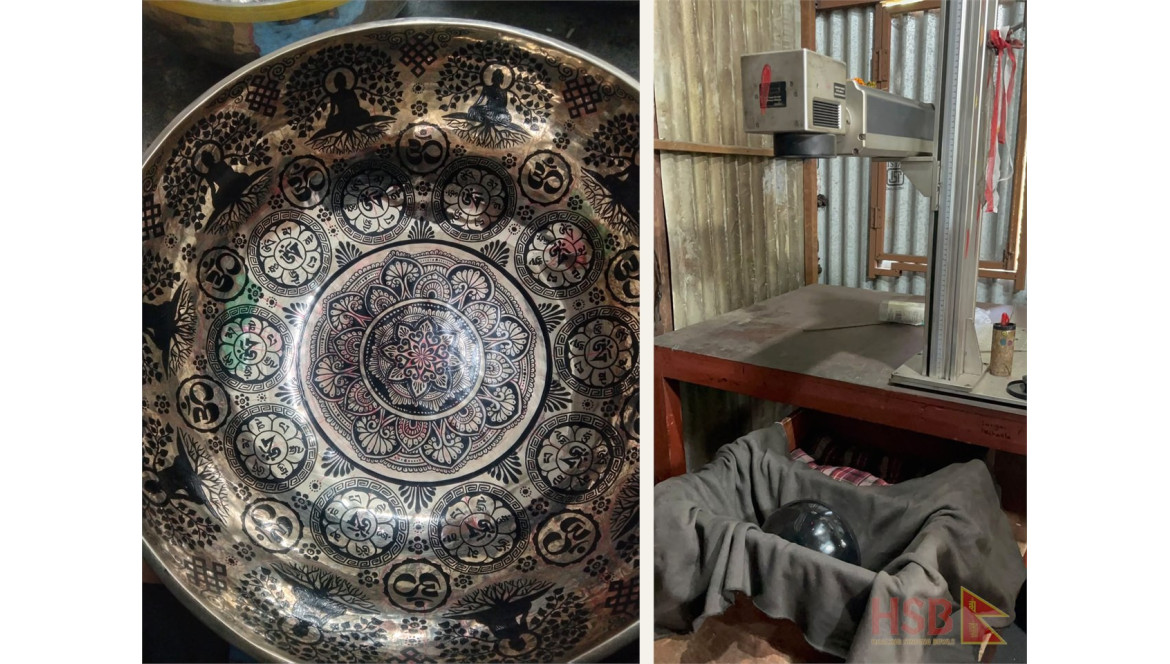
Machine-made bowls are uniform and consistent, but they lack acoustic complexity.
Hand-hammered bowls, on the other hand, contain micro-variations in thickness and tension. These irregularities create multiple simultaneous frequencies, producing a rich, layered sound.
This is why handcrafted bowls feel more “alive” and dynamic.
Why No Two Singing Bowls Sound the Same
Every hammer strike varies slightly in force, angle, and placement. These variations create a unique internal structure within each bowl.
The result is a completely distinct acoustic signature—like a fingerprint.
How to Choose a High-Quality Singing Bowl
- Sustain: The sound should last 30–60 seconds or more
- Overtones: Listen for layered, complex tones
- Consistency: The pitch should remain stable across strikes
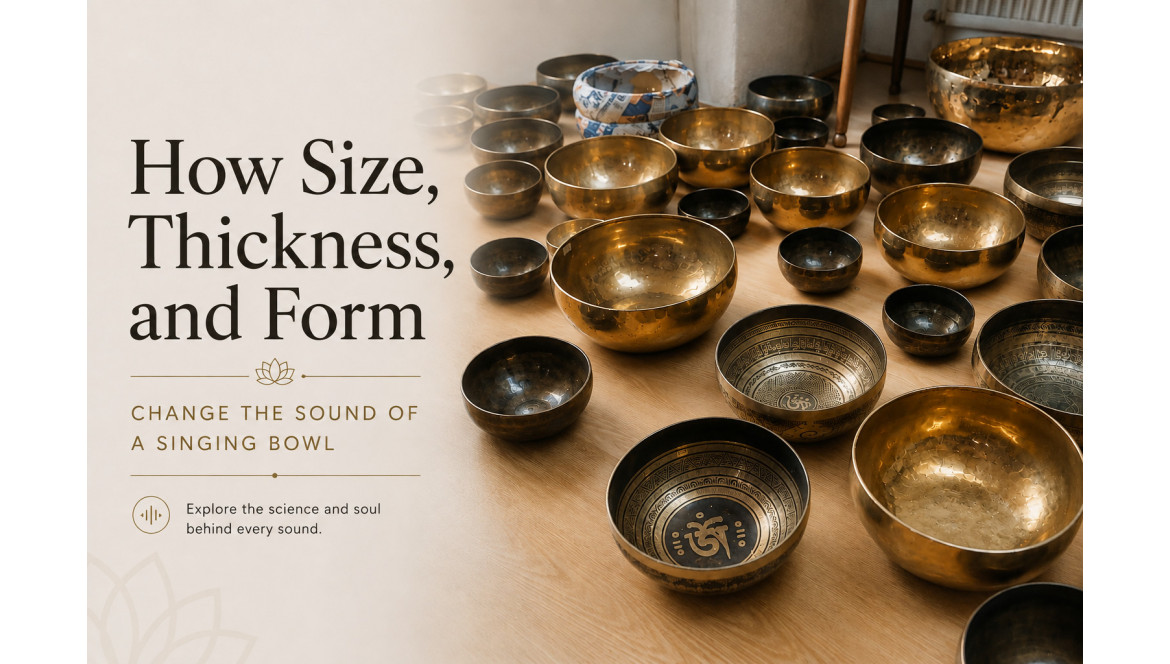
- Wall thickness: Should feel even throughout
- Hammer marks: Visible marks indicate hand forging
Frequently Asked Questions
Does a heavier bowl produce a deeper sound?
Not always. While heavier bowls tend toward lower frequencies, hammering intensity can significantly influence pitch.
Can machine-made bowls match hand-hammered ones?
No. Machine processes cannot replicate the micro-variations and internal tension created by hand forging.
Which matters more: alloy or hammering?
Both are essential. The alloy sets the tonal potential, while hammering determines how much of that potential is realized.
Conclusion
Hammering is not just a manufacturing step—it is the defining force behind a singing bowl’s voice. Through controlled force, temperature, and timing, craftsmen shape not only the form of the bowl but its entire acoustic identity.
This is why no two hand-hammered singing bowls will ever sound the same.
In Same Category
- Can You Place Singing Bowls on the Body? Safety and Best Practice
- Om Sajan Healing Center and Museum: Inside Kathmandu's Three-Floor Singing Bowl Sanctuary
- What Is Sound Healing? Traditions, Sound Baths & Research
- Tingshas vs Singing Bowls: Which Sound Healing Tool Should You Use?
- Handmade vs Machine-Made Singing Bowls: Key Differences


Comments
No comment at this time!
Leave your comment