


Group Sound Healing: Singing Bowls and Gong Guide
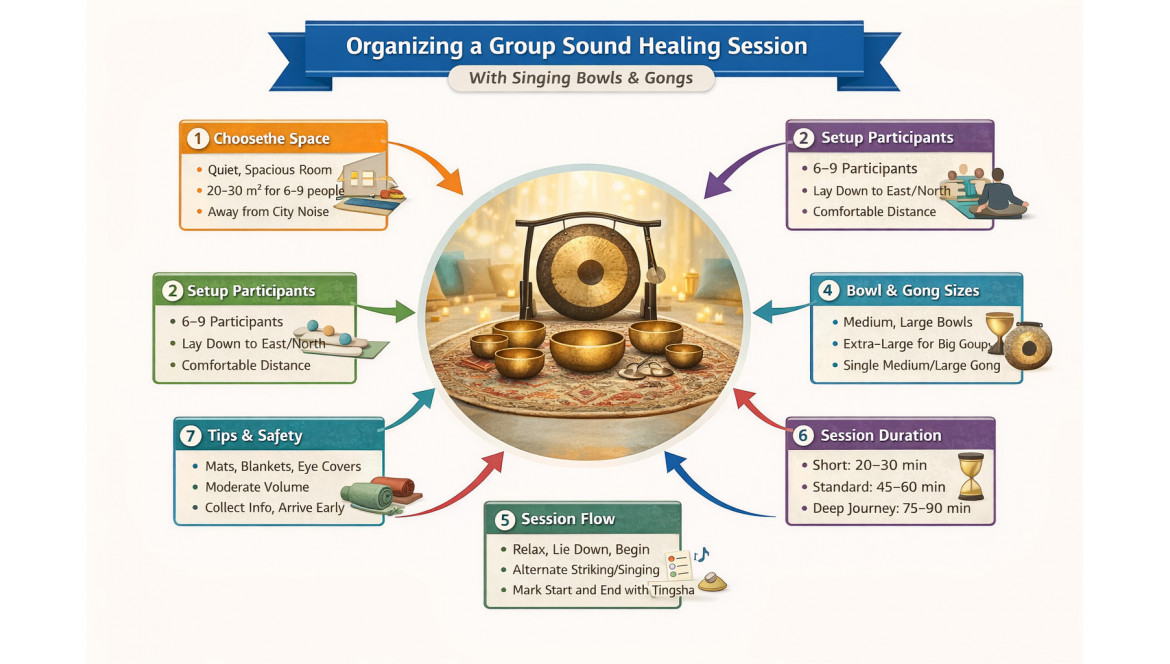
Learn how to lead group sound healing sessions with singing bowls and gongs. This guide covers everything from choosing the right space and ideal group size to arranging instruments for smooth sound layering. Discover step-by-step session flow, including meditation, sound layering, gong use, and gentle closing. Practical tips on participant positioning, instrument placement, and safety help create a calm, supportive environment. Perfect for retreats, workshops, or wellness events, this resource ensures your sessions are professional, immersive, and deeply relaxing for every participant.
Introduction
There is no single right or wrong way to conduct a sound healing or group sound session. Every sound healer develops their own style with experience. However, having a clear structure and thoughtful setup helps you conduct group sessions more accurately, safely, and confidently.
This guide helps practitioners organise a group sound healing session using singing bowls and a gong, covering space selection, group size, instrument arrangement, session flow, and safety considerations. The steps are kept simple for easy understanding, even for non-native English speakers.
Choosing the Right Space for a Group Sound Healing Session
Location and Environment
- Choose a room away from busy roads, traffic, and city noise.
- A calm, quiet environment allows participants to relax deeply.
- If inside a city, use basic soundproofing or noise insulation.
Room Size and Comfort
- Enough space for participants to lie down comfortably.
- Enough room for the sound healer to move freely.
- For 6–9 participants, a room of 20–30 m² is sufficient.
Ideal Group Size for Sound Healing Sessions
For one sound healer, the ideal group size is 6–9 participants.
- Easy to manage the space.
- Allows individual attention if needed.
- Creates balanced group energy without overcrowding.
Larger groups require bigger rooms, louder instruments, and more experience from the practitioner.
Direction and Participant Positioning
Healer Position
Sit on the east or north side of the room whenever possible.
Participant Position
Participants should lie down with their head pointing toward the sound healer. This orientation supports meditation, yoga, and relaxation.
Distance and Movement Space
- Keep enough distance to move comfortably and access instruments easily.
- Avoid crowded setups that restrict movement or create tension.
Organising Singing Bowls and Gong Placement
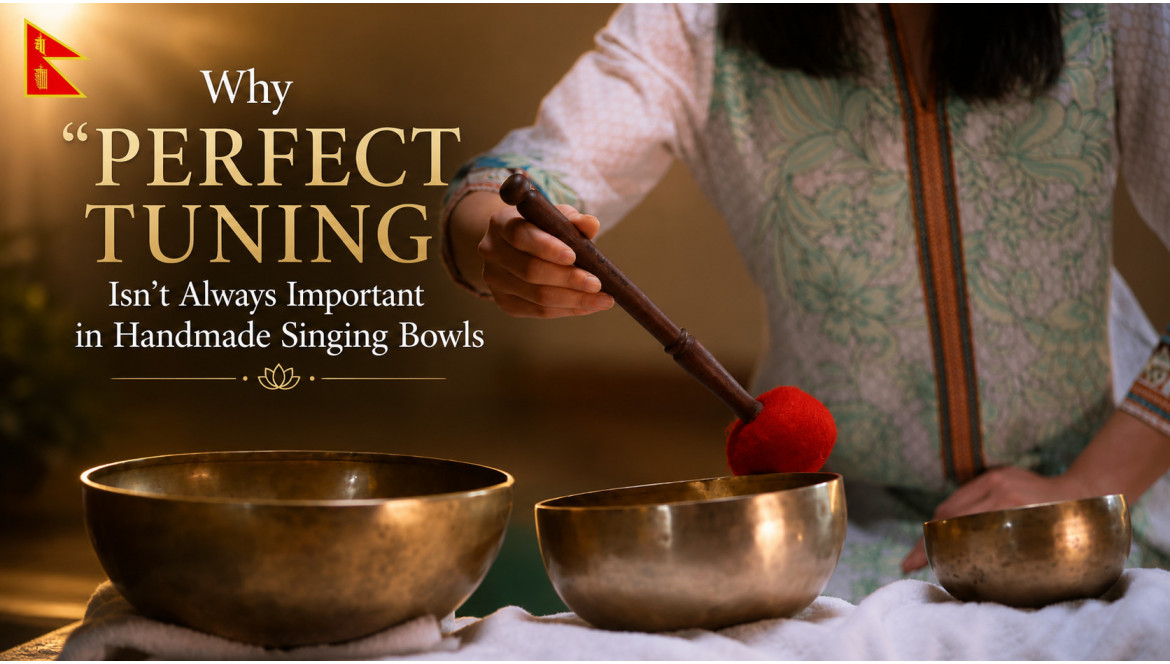
Singing Bowl Arrangement
- Place bowls on firm, stable surfaces: floor mats, padded risers, or low tables.
- Arrange bowls in a semi-circle around you.
- Keep larger, lower-pitched bowls closer to your center; medium and higher-pitched bowls on the sides.
Gong Placement
- Position slightly behind or to one side of the healer.
- Ensure enough space for safe mallet movement.
- Never place participants directly behind the gong.
Choosing the Right Instrument Sizes
Singing Bowls
- Small-medium rooms: medium bowls (6–8 inches) + 1–2 large bowls (9–12 inches).
- Larger halls: include one extra-large bowl (13+ inches) as an anchor tone. If you are assembling the core bowl set itself, use our 7-bowl Tibetan singing bowl set guide to compare roles, sizes and practical selection points.
Gong Selection
One medium or large gong is sufficient. Bowls carry the main sound field; gong adds waves, transitions, and deeper moments.
Structuring the Group Sound Healing Session
Opening the Session
- Start with participants seated comfortably.
- Guide gentle breathing and simple meditation.
- Transition to sound healing with participants lying down and heads toward the sound source.
- Use a tingsha bell to mark the beginning.
Playing Techniques During the Session
- Alternate between gentle singing and light striking of bowls.
- Add sound layers gradually.
- Use resonance and occasional mild dissonance for movement.
Using the Gong
- Introduce sparingly, in smooth arcs: build, sustain, soften.
- Avoid sudden loud peaks, especially for first-time participants.
Closing and Integration
- Gradually reduce sound, ending with a soft bowl or gentle chime.
- Mark the end with a tingsha bell.
- Bring awareness back slowly; allow time for participants to sit, share experiences, or journal.
Typical Duration for Group Sound Healing Sessions
- Short/Taster Sessions: 20–30 minutes of sound – suitable for festivals or corporate events.
- Standard Sessions: 45–60 minutes of sound; total 60–75 minutes including opening and closing.
- Deep Journey Sessions: 75–90 minutes of sound; total 1.5–2 hours for retreats or special events.
Practical Details and Safety Considerations
Capacity and Comfort
- Prepare yoga mats, blankets, and eye covers for 6–9 participants.
- Up to 15 participants can fit comfortably in 20–30 m² with one practitioner.
Volume Control
Keep the volume moderate. Sound should fill the space without overwhelming participants.
Administration and Preparation
- Collect sign-ups and health notes in advance.
- Arrive early to set up instruments calmly.
- Keep a simple session outline or timing guide to stay relaxed and present.
Final Thoughts
A well-organised group sound healing session creates a safe, supportive environment where participants can relax deeply and receive sound comfortably. Thoughtful space planning, correct instrument placement, and a gentle session flow help singing bowls and gong work together to create a powerful group sound experience.
In Same Category
- Can You Place Singing Bowls on the Body? Safety and Best Practice
- Om Sajan Healing Center and Museum: Inside Kathmandu's Three-Floor Singing Bowl Sanctuary
- Tingshas vs Singing Bowls: Which Sound Healing Tool Should You Use?
- Handmade vs Machine-Made Singing Bowls: Key Differences
- Singing Bowl Mallet Guide: How to Choose the Right Mallet


Comments
No comment at this time!
Leave your comment