


A hand-hammered singing bowl takes shape through a sequence of practical workshop operations. Heat makes the metal workable; coordinated hammering gradually develops its form; finishing and selection prepare the completed bowl for its intended use. This visual guide follows the main stages used for HSB’s own hand-hammered ranges, rather than claiming that every artisan collection we distribute uses an identical process.
To place these modern workshop methods in context, explore the history and origins of singing bowls, from bronze household vessels to instruments selected for sound.
Hand Shaping in the Workshop
Watch HSB artisans hand-shape a singing bowl in the workshop.
1. Prepare the metal disc
For the core HSB process described here, the alloy is prepared and cast into a thick circular disc. This starting piece is not yet a bowl. It provides the metal that the artisans will progressively shape into the base, curved walls and rim. Alloy specifications can differ between collections.
2. Heat, hammer and reheat
The disc is heated until it is workable, then shaped through coordinated hammering under an experienced craftsperson’s direction. As the metal cools, it returns to the furnace before the next forming cycle. Repeated heating and hammering gradually turn the flat disc into a three-dimensional vessel; the process is not completed in a single strike or one fixed cycle.
3. Guide the shape with workshop tools
The stone forming mould shown in the workshop photographs helps the bowl take shape during forming. The other photographs show wood-headed mallets used for striking and shaping, alongside other workshop tools, including metal-headed hammers.
During this work, the artisans progressively assess the bowl’s diameter, height, curvature, wall thickness, base and rim. Tools support that shaping work; they do not remove the need for judgement and adjustment by hand.
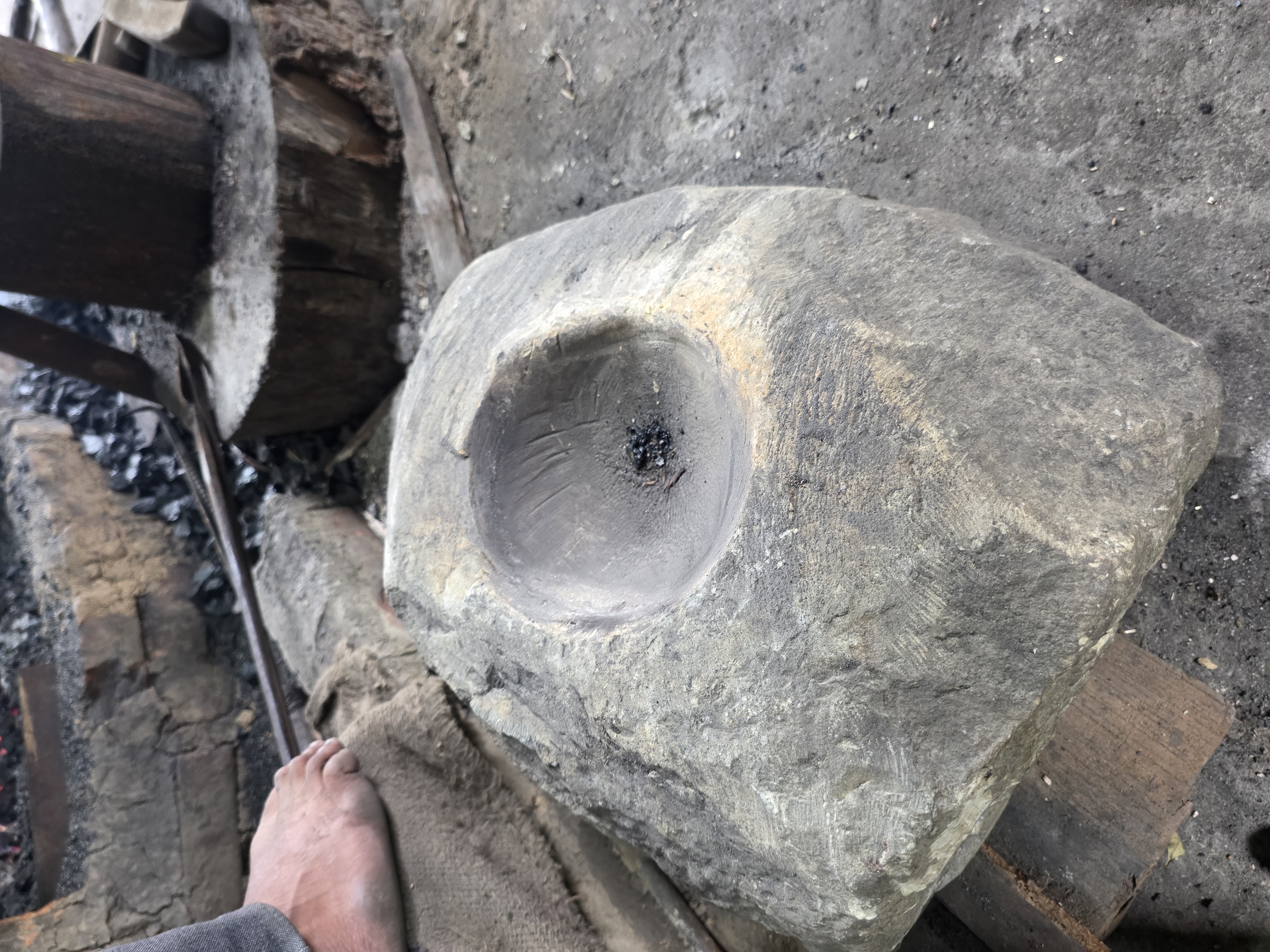
Stone forming mould for shaping singing bowls.
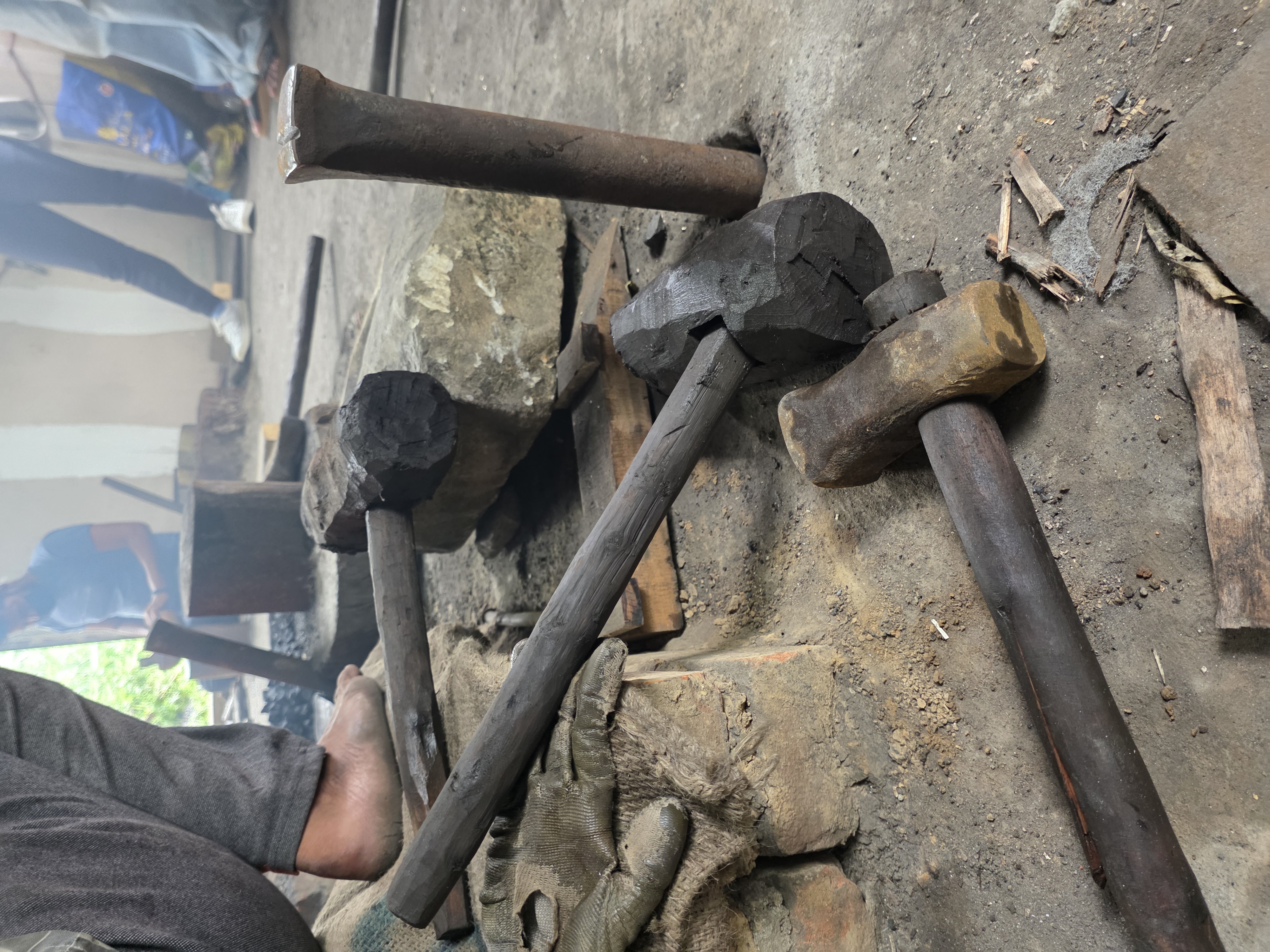
Wooden mallets and a metal-headed hammer at the forming station.
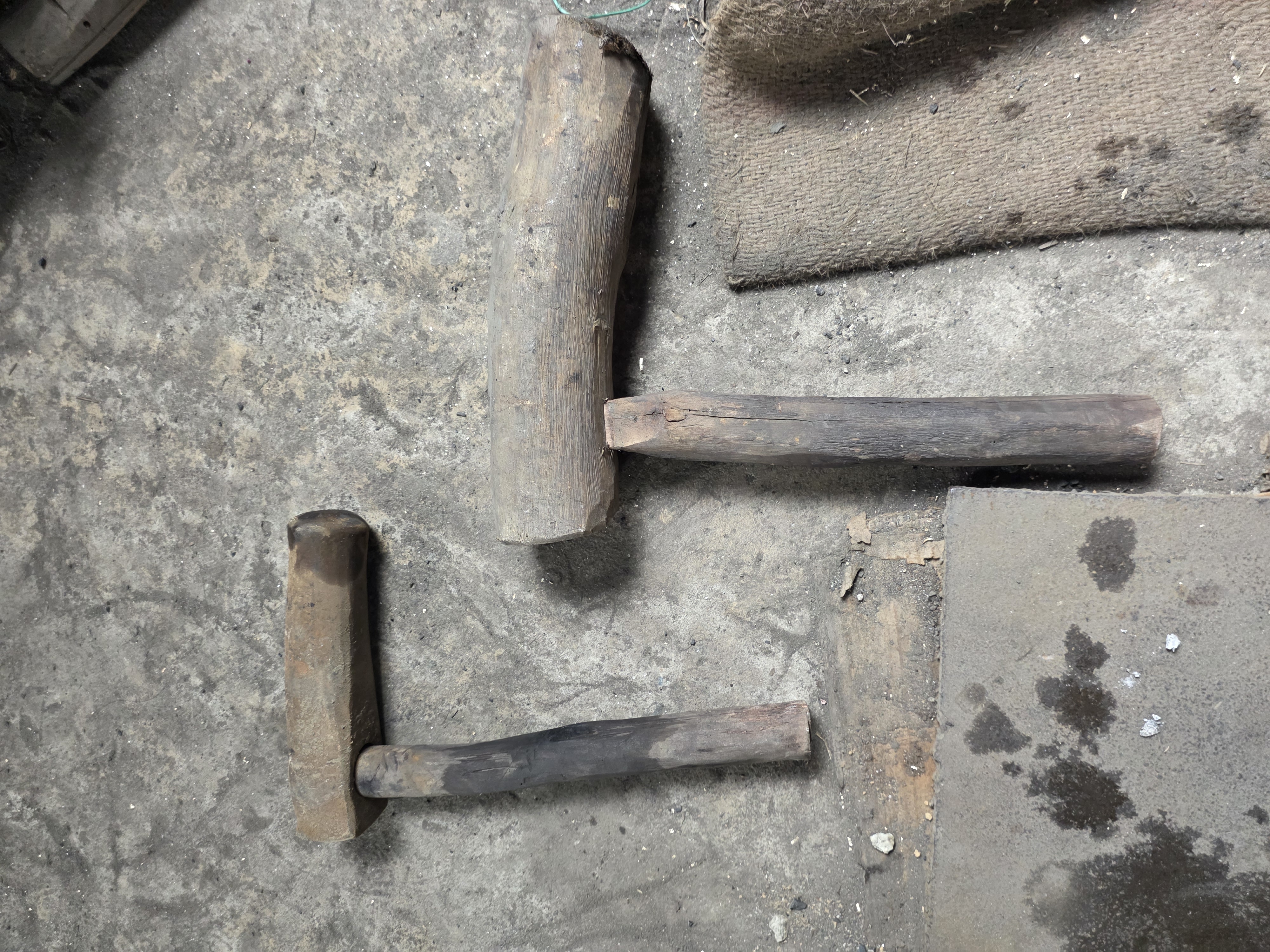
Close-up of a wooden mallet and a metal-headed hammer.
4. Refine the rim and clean the surface
Once the main form is established, suitable mechanical finishing tools may be used to regularise the rim. The surface is cleaned to remove residues left by repeated heating, then sanded where needed. Hand-hammered describes how the bowl’s form is created; it does not mean that every finishing operation is carried out without tools.
5. Apply the selected finish
Depending on the collection or agreed project, the bowl can retain a natural finish or receive a patina, carving, engraving or a logo. These decorative operations are distinct from forming the bowl. A patina or engraved design should not be understood as automatically improving its sound. Explore customised singing bowls for eligible personalisation options.
6. Check, select and pack
The finished bowl is inspected for condition, form, surface finish and sound. When an order calls for a particular musical note, selection is based on measurement of the finished bowl; not every bowl sold by size is assigned an exact note. Approved products are then protected and separated for shipment. Natural differences in shape, hammer marks and resonance remain part of handmade production.
See our quality-control process for the checks, size bands and musical-note selection rules.
For the people, locations and production network behind these stages, visit HSB’s Kathmandu Valley workshop. For the additional demands of larger formats, read how large and giant singing bowls are made.