


Singing Bowl Mallet Guide: How to Choose the Right Mallet
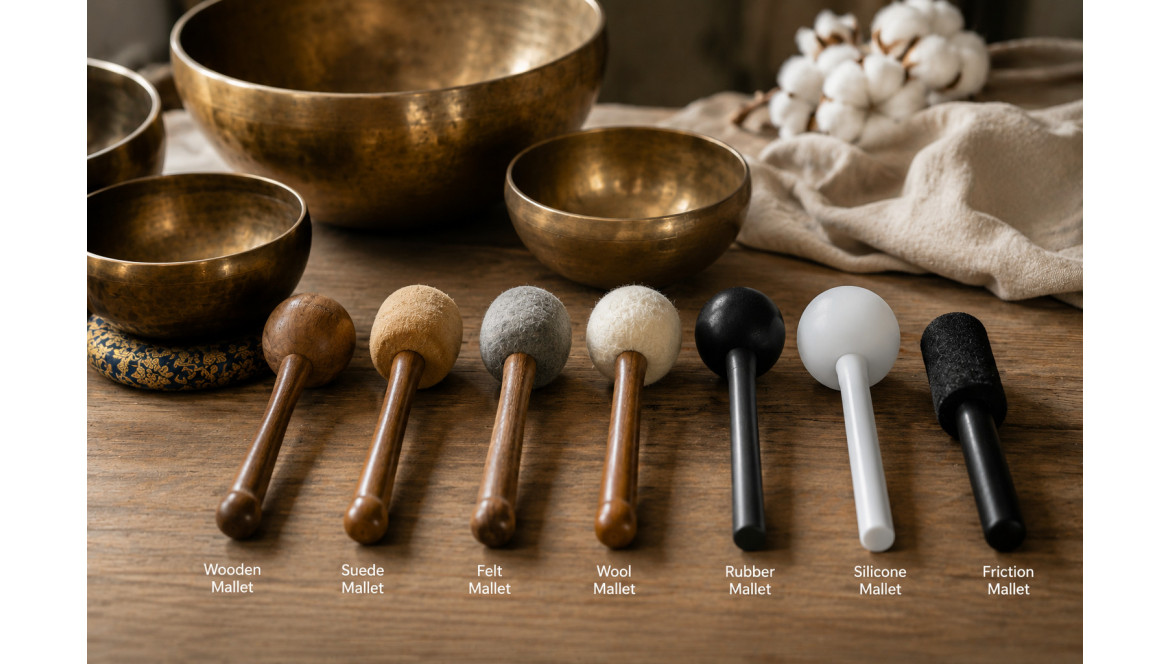
Learn how to choose the right singing bowl mallet for your practice. Explore wooden, suede, felt, wool, rubber, silicone, and friction mallets, and understand how each affects sound, vibration, and ease of playing.
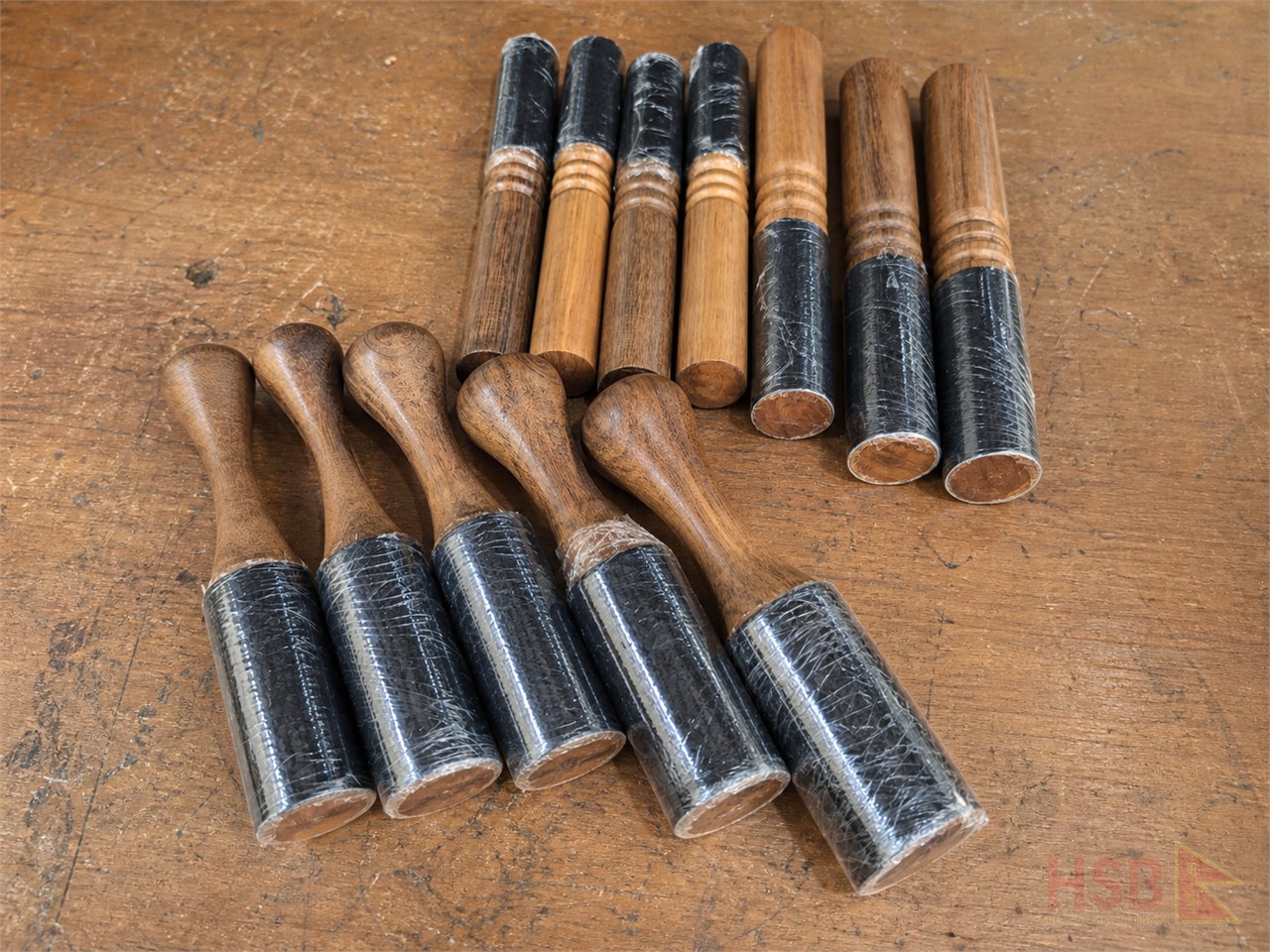
Singing Bowl Mallet Guide: How to Choose the Right Mallet
Choosing a singing bowl is important, but choosing the right mallet is equally important. Most people don't realize that the mallet affects the entire experience. The mallet changes how your bowl sounds, how easy it is to play, and how deep the vibrations go. This guide helps you choose the perfect mallet for your singing bowl practice.
Quick Answer: Wooden mallets are best suited to bright, crisp striking sounds for beginners. Suede mallets are best suited to rim-singing and general meditation practice, making them the most versatile default choice. Felt and wool mallets are best suited to larger bowls, sound baths, and deep meditation, while rubber, silicone, and friction mallets serve more specific needs like crystal bowls and sustained rim-singing. Many practitioners start with one quality suede mallet and add others as their practice develops.
What Does a Mallet Change?
A mallet is not just an accessory. It is part of your instrument's voice. The right mallet affects the tone, ranging from bright and sharp to warm and deep, the sustain or how long the sound lasts, the ease of playing, especially for rim-singing, and the vibration, or how intensely you feel it in your hand and body. Using the wrong mallet is like using the wrong bow on a violin: the instrument doesn't sing properly.
Main Mallet Types
Wooden Mallets
Wooden mallets give a clear, defined strike with a sharper, more direct tone. They're durable and long-lasting, create a crisp, percussive sound, work well for striking rather than rim-singing, and can sound harsh on some bowls. They're best for beginners who want a clean attack and clear tone.
Suede Mallets
Suede mallets produce warm, balanced tones with rich depth. They're excellent for rim-singing, bring out lower frequencies, create smooth, meditative sound, and are very versatile across bowl sizes. They're best for most practitioners and are often the default choice.
Felt Mallets
Felt mallets are soft and create gentle vibrations. They produce pleasant, long-lasting sound, are ideal for larger bowls, create soft, immersive tones, and work well for extended sessions. They're best for sound baths and deep meditation.
Felt head size also matters: the 30 cm Lollipop mallet has a compact 3 cm head, offering an option for light strikes on smaller bowls.
Wool Mallets
Wool mallets behave similarly to felt, producing gentle, rounded tones. They make soft contact with the bowl, create rounded, gentle resonance, work well for meditative playing, and can be softer than felt in some cases. They're best for practitioners wanting soft, soothing sound.
Rubber and Silicone Mallets
Rubber and silicone are forgiving starter options. They're versatile and beginner-friendly, work well for different bowl sizes, are protective and won't damage bowls, and help while you're learning. They're best for beginners testing different bowls and for crystal bowls.
Friction Mallets
Friction mallets are designed for rim-playing rather than striking. They create sustained tones by friction, are essential for continuous rim-singing, are used in professional sound baths, and work best with larger bowls. They're best for sound healers and advanced players.
Quick Comparison
| Mallet Type | Sound Character | Best For | Ease of Use | Durability |
|---|---|---|---|---|
| Wooden | Bright, crisp, sharp | Clear attacks, percussive sound | Easy | Very durable |
| Suede | Warm, balanced, rich | Rim-singing, meditation | Easy to moderate | Good |
| Felt | Soft, gentle, full | Deep tones, larger bowls | Moderate | Good |
| Wool | Rounded, gentle, mellow | Meditative play, soft sound | Moderate | Good |
| Rubber/Silicone | Versatile, forgiving | Beginners, crystal bowls | Very easy | Good |
| Friction | Sustained, continuous | Rim-singing, sound baths | Difficult | Moderate |
How to Match Mallet to Bowl Size
Small Bowls (6-7 inches)
The best mallets are lightweight wooden or suede. Avoid heavy felt or friction mallets, since smaller bowls respond better to lighter contact.
Medium Bowls (8-10 inches)
The best mallets are suede or felt. Avoid very heavy mallets, since medium bowls work well with versatile, balanced mallets.
Large Bowls (12+ inches)
The best mallets are heavy felt or wool. Avoid wooden or light mallets, since larger bowls need heavier mallets to produce deep, full tones. As a mallet length rule, a baseline of 10 inches works for Tibetan singing bowls, adjusted based on bowl size and your hand size.
Choosing Mallets by Sound Goal
For a Bright and Crisp Sound
Choose a wooden mallet, since it creates a sharp, defined attack.
For a Warm and Balanced Sound
Choose a suede mallet, since it's versatile and produces rich tones.
For a Deep and Grounding Sound
Choose a felt or wool mallet, since these produce lower frequencies.
For Easy Playing
Choose a silicone or rubber mallet, since these are forgiving for beginners.
For Continuous Rim-Singing
Choose a suede or friction mallet, since these sustain tone without stopping.
For a Soft, Immersive Sound
Choose a felt mallet, since it creates gentle vibrations with long resonance.
Mallet Buying Tips
Know Your Playing Style
If you're striking the bowl, choose wooden, suede, or felt. If you're rim-singing, choose suede or friction mallets. If you're a beginner, choose rubber, silicone, or suede.
Match Mallet Weight to Bowl Size
Heavier mallets work better with larger bowls, while lighter mallets suit smaller bowls. A mallet that's too light won't draw out the full tone, and a mallet that's too heavy can be difficult to control.
Consider Your Hand Size
Larger hands may prefer longer mallets around 11 to 12 inches, while smaller hands may prefer shorter mallets around 8 to 9 inches. You should be able to hold the mallet comfortably and control it easily.
Buy Quality Mallets
A quality mallet lasts longer and produces better sound, while cheap mallets wear out quickly and sound flat. Investing in a good mallet is as important as investing in a good bowl.
Best Starter Mallet Setup
Setup 1: For Metal Singing Bowls
Choose one suede mallet, since it's the most versatile, plus one felt mallet for deeper tones, which is optional but recommended.
Setup 2: For Crystal Singing Bowls
Choose one soft silicone or rubber mallet to protect the bowl, plus one suede mallet for advanced playing.
Setup 3: Complete Setup for All Bowl Types
Choose one suede mallet for everyday use, one felt mallet for deeper, fuller sound, and one silicone mallet for gentle playing and crystal bowls.
My recommendation: start with one quality suede mallet for metal bowls. It's the most versatile choice.
Frequently Asked Questions
Can I use just one mallet for all my bowls?
Yes. A quality suede mallet works well with most bowl sizes. But different mallets bring out different qualities in your bowls.
What mallet should I use for a crystal singing bowl?
Use a soft rubber or silicone mallet. Hard mallets can damage crystal bowls, while soft mallets protect the rim and allow better vibration.
Are expensive mallets worth it?
Quality mallets last longer and produce better sound. A mid-range quality mallet in the $15 to $30 range is worth the investment over a cheap one around $5.
Can I use the mallet that came with my bowl?
Usually yes. Most bowls come with adequate mallets, but upgrading often improves your experience.
How do I know if my mallet is the right size?
You should hold it comfortably and control it easily, and your hand shouldn't tire quickly. If you can't reach the bowl rim, the mallet is too short.
Should the mallet match the bowl material?
Not necessarily. The mallet should match the bowl size and your playing style instead. A suede mallet works with almost any metal bowl.
How often should I replace my mallet?
Felt and wool mallets wear out after 1 to 2 years of regular use. Wooden and suede mallets last longer, typically 2 to 5 years.
Can I make my own mallet?
Technically yes, but quality mallets are inexpensive enough that buying them is usually better.
Do friction mallets work with all bowl sizes?
Friction mallets work best with larger bowls of 10 inches or more. Small bowls don't generate enough friction for good sustained tones.
What mallet works best for sound baths?
Suede or friction mallets for sustained, continuous playing, and felt mallets for softer, immersive sound.
Final Thoughts
A quality mallet unlocks the full potential of your singing bowl. The right mallet choice makes playing easier, sounds better, and deepens your meditation experience. Start with one good suede mallet, and as you practice, you may want to add felt and friction mallets to create different sounds and effects. Remember that the mallet is part of your instrument, so choose it as carefully as you choose your bowl.
In Same Category
- Can You Place Singing Bowls on the Body? Safety and Best Practice
- Om Sajan Healing Center and Museum: Inside Kathmandu's Three-Floor Singing Bowl Sanctuary
- Tingshas vs Singing Bowls: Which Sound Healing Tool Should You Use?
- Handmade vs Machine-Made Singing Bowls: Key Differences
- Why Do Tingshas Sound So Sharp and Clear?


Comments
No comment at this time!
Leave your comment